Analysis of current economic conditions and policy
Today’s TACO Tuesday and the Markets
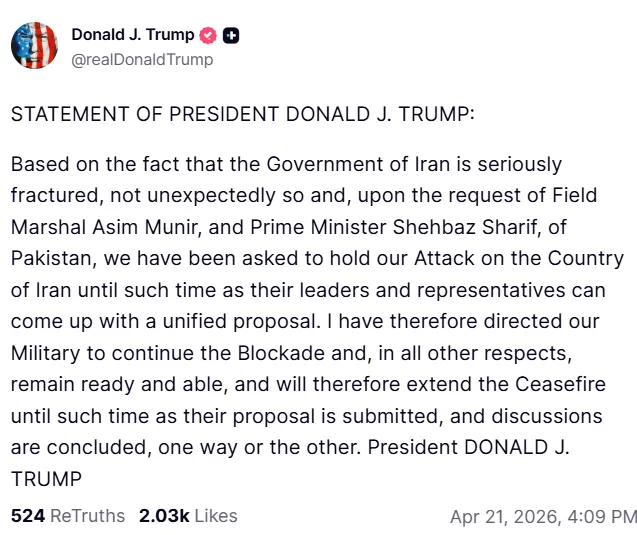
From Mr. Trump:
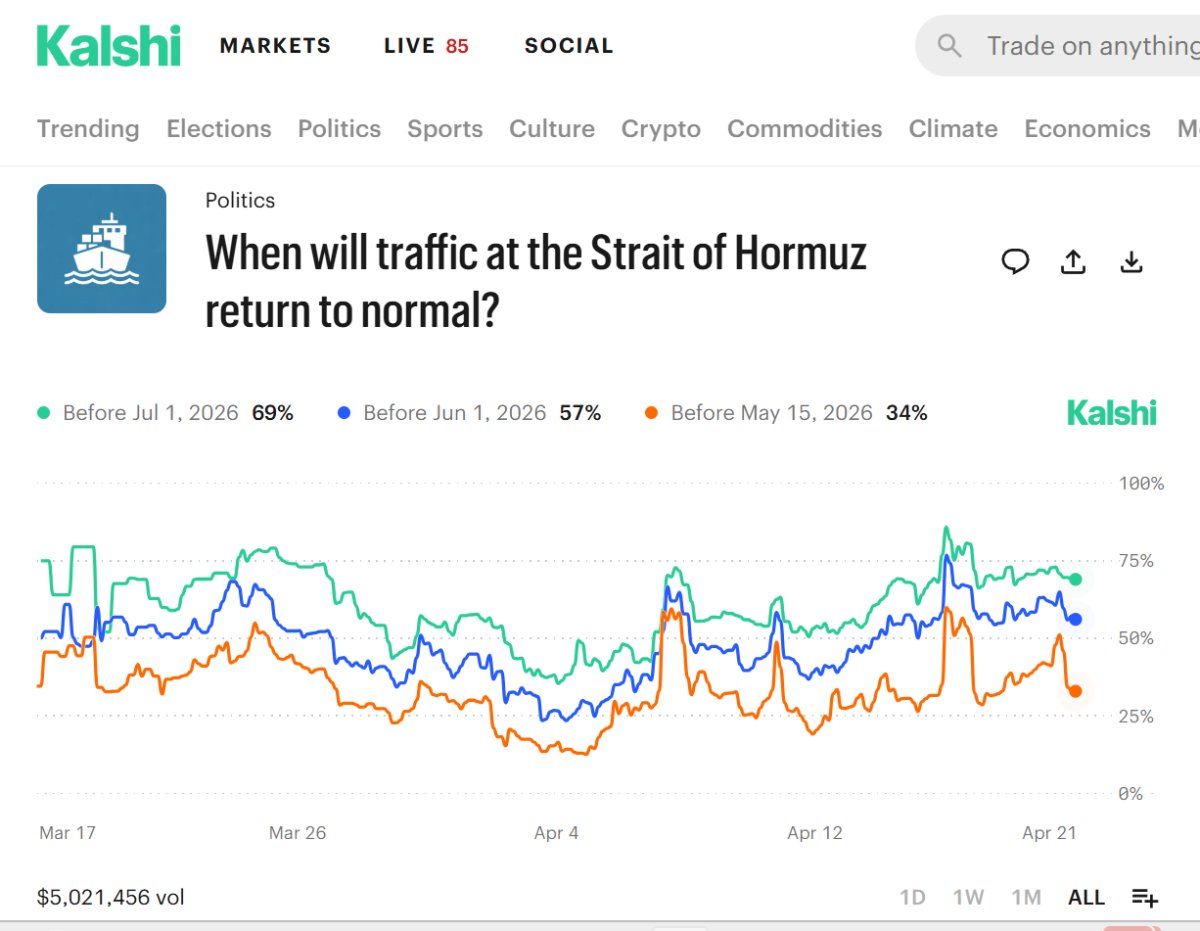
Betting on reopening the Strait of Hormuz:
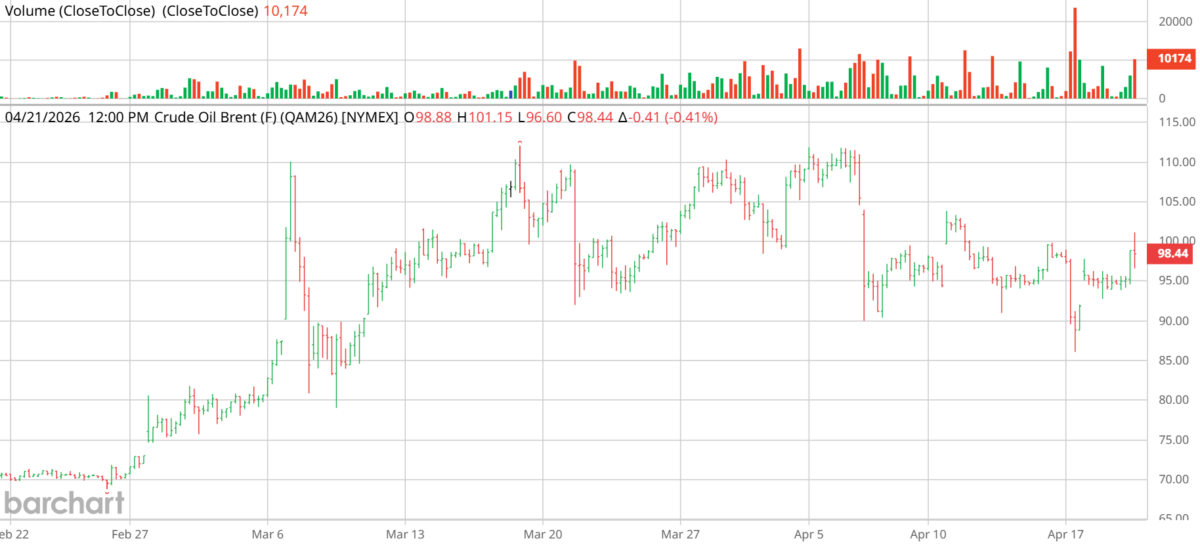
Front month Brent futures:
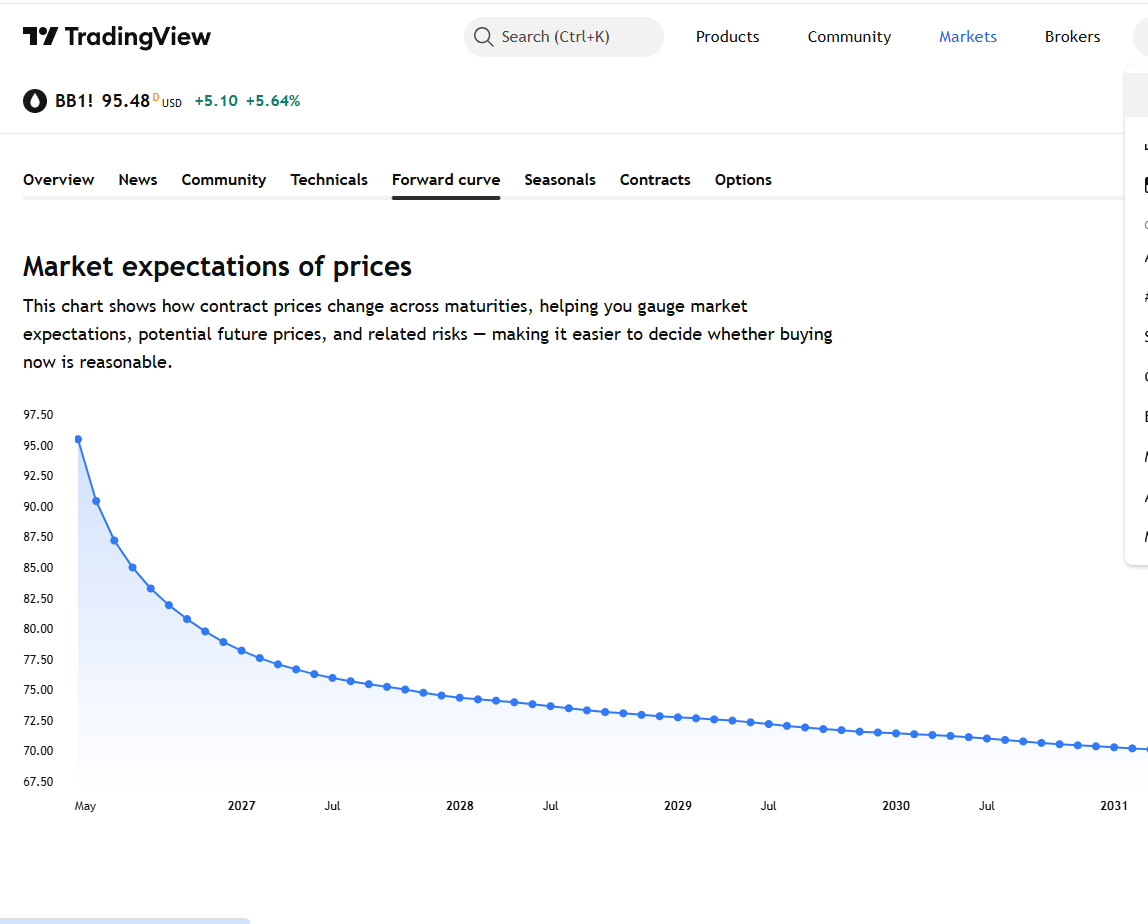
The forward curve still indicates backwardation at short and long end of spectrum.
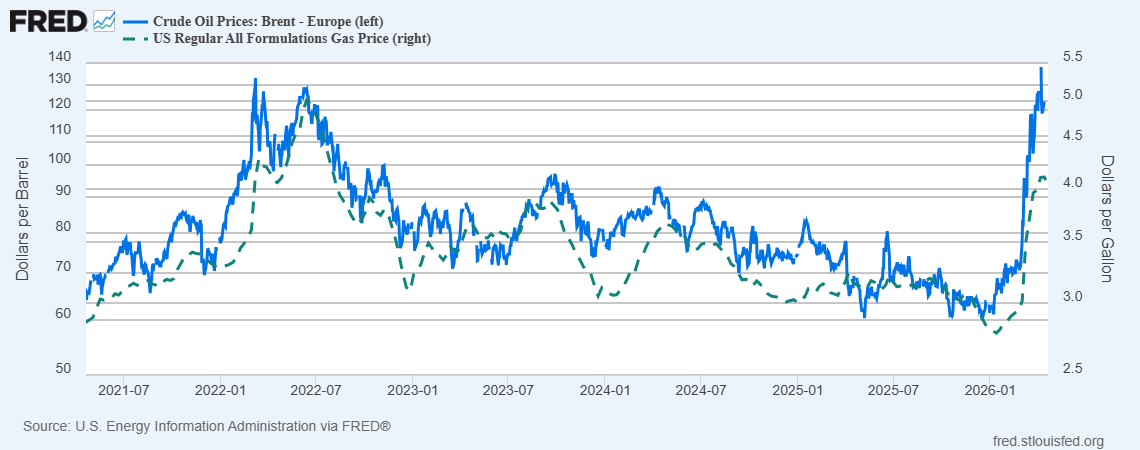
Here’s Brent and gasoline time series:
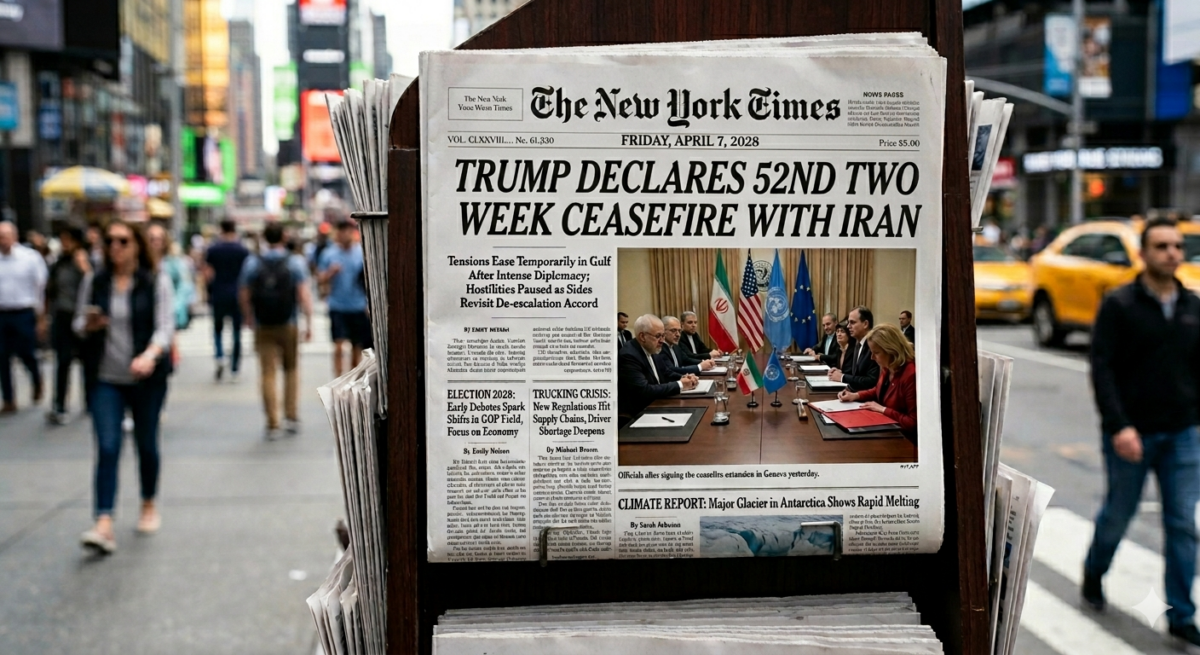
My prediction for April 7, 2028?
4 thoughts on “Today’s TACO Tuesday and the Markets”
Macroduck
C’mon, Menzie, that’s a crazy prediction. There won’t be an ink-on-paper NYT by the Spring of ’28.
Macroduck
Speaking of oil prices, Krugman argues that the approach many analysts are taking to the economic effects of the war – including, he thinks, that of the IMF – is to start from oil prices and work to economic effects. He’s not a fan:
“More generally, I would argue that the usual approach to modeling the effects of the Hormuz crisis goes about it the wrong way around. We should start with the physical supply constraints, not a guess about oil prices.”
He’s not alone in that view. There is evidence since the oil embargoes of the 1970s – and, I suspect, from the Covid supply-chain disruption – that physical shortages have a greater impact on economic activity than just the effect of the associated increase in price.
We know that the world relies less on fossil fuels per unit of output now than in the past. Price increases are less harmful now because fossil fuel is a smaller share of inputs to production now than in the past. A physical shortage, however, is another matter; for the want of a nail, and all that.
Aside from fossil fuel as energy, about 15% of global oil production 5% of gas production and 1% of coal production is used as feedstock. Fertilizers, chemicals and such are made from oil, gas and coal. The plastics industry, alone, absorbs about 6% of global oil output as feedstock. Then there’s synthetic fiber – over 340 million barrels of oil are used each year to manufacture synthetic fiber, and that figure was growing. A physical shortage of oil doesn’t just raise the cost of production; it cuts production outright. Where will Marvel Studios get enough spandex for its next blockbuster? Where will Legos come from? Car seats? Counter tops? Aquafor for babies’ bottoms? Heck, even Christmas comes mostly from deep underground.
You think people are mad about prices? Wait till the disposable diapers run out.
Macroduck
Oh, Boy! A racist administration is charging an anti-racism group with fraud in service of racism:
Remember “The Producers” by Mel Brooks? Produce a play about Nazis that’s so bad, it’ll go out of business so the investors will never know you stole their money, but the public loves it, so it makes miney, so the producers go to prison? Brooks is apparently writing for the Justice Department these days.
Anonymous
This is not a ceasefire. Still TACO.
USN blockade violated the 8 April and remains a war activity. IDF continues to breech the 8 April ceasefire.
Trump is conserving expensive ordnance that will take years to restock, if anyone is beginning to plan.
This week EIA petroleum balance sheet. Strategic Petroleum Reserve down 4 million barrels. Gasoline and diesel stocks down week on week, and net crude imports down from average.
At this rate 100 days to empty emergency reserves for crude.
C’mon, Menzie, that’s a crazy prediction. There won’t be an ink-on-paper NYT by the Spring of ’28.
Speaking of oil prices, Krugman argues that the approach many analysts are taking to the economic effects of the war – including, he thinks, that of the IMF – is to start from oil prices and work to economic effects. He’s not a fan:
“More generally, I would argue that the usual approach to modeling the effects of the Hormuz crisis goes about it the wrong way around. We should start with the physical supply constraints, not a guess about oil prices.”
https://paulkrugman.substack.com/p/the-harm-from-hormuz
He’s not alone in that view. There is evidence since the oil embargoes of the 1970s – and, I suspect, from the Covid supply-chain disruption – that physical shortages have a greater impact on economic activity than just the effect of the associated increase in price.
We know that the world relies less on fossil fuels per unit of output now than in the past. Price increases are less harmful now because fossil fuel is a smaller share of inputs to production now than in the past. A physical shortage, however, is another matter; for the want of a nail, and all that.
Aside from fossil fuel as energy, about 15% of global oil production 5% of gas production and 1% of coal production is used as feedstock. Fertilizers, chemicals and such are made from oil, gas and coal. The plastics industry, alone, absorbs about 6% of global oil output as feedstock. Then there’s synthetic fiber – over 340 million barrels of oil are used each year to manufacture synthetic fiber, and that figure was growing. A physical shortage of oil doesn’t just raise the cost of production; it cuts production outright. Where will Marvel Studios get enough spandex for its next blockbuster? Where will Legos come from? Car seats? Counter tops? Aquafor for babies’ bottoms? Heck, even Christmas comes mostly from deep underground.
You think people are mad about prices? Wait till the disposable diapers run out.
Oh, Boy! A racist administration is charging an anti-racism group with fraud in service of racism:
https://www.npr.org/2026/04/21/g-s1-118275/southern-poverty-law-center-fraud-charges-paid-informants
Remember “The Producers” by Mel Brooks? Produce a play about Nazis that’s so bad, it’ll go out of business so the investors will never know you stole their money, but the public loves it, so it makes miney, so the producers go to prison? Brooks is apparently writing for the Justice Department these days.
This is not a ceasefire. Still TACO.
USN blockade violated the 8 April and remains a war activity. IDF continues to breech the 8 April ceasefire.
Trump is conserving expensive ordnance that will take years to restock, if anyone is beginning to plan.
This week EIA petroleum balance sheet. Strategic Petroleum Reserve down 4 million barrels. Gasoline and diesel stocks down week on week, and net crude imports down from average.
At this rate 100 days to empty emergency reserves for crude.