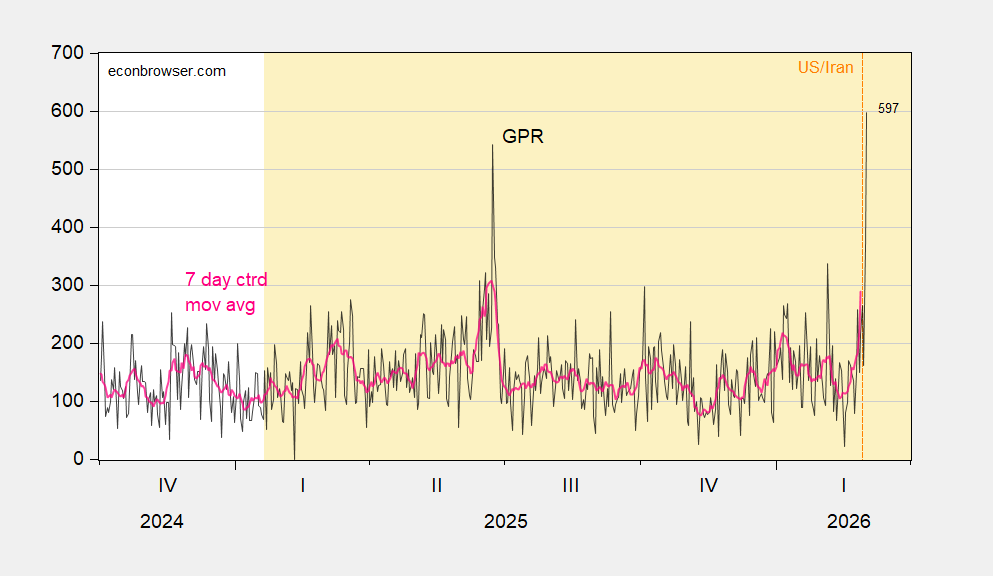
4 thoughts on “On Day 5 of War, EPU and GPR Spiked”
Macroduck
The VIX is not all that high, perhaps because stocks aren’t all that volitile, nor have there been days as bad for stocks in response to the war as, for instance, the day Citrini ‘s AI note came out:
That’s just a level for a growing series, so maybe not so bad? Nah, it’s bad. Margin debt relative to GDP is higher than prior to the dot.com collapse. That’s part of the reason the cryptid sell-off was so vicious – lots of leverage. And, of course, the Buffet and Shiller valuation metrics are screaming “Sell! Mortimer, sell!”. So mechanically, explaining the performance of the VIX ain’t hard, but the overall calm of equities is just baffling.
Macroduck
Meanwhile, check what’s happening with the Hang Seng, Kopsi and Nikkei indices. Reliance on MidEast oil has bit them pretty hard.
The poor performance of U.S. shares relative to shares in other developed markets in recent months has been quite notable. Could be that’s changing as a result of the war.
joseph
First they say that the Department of Defense should be called the Department of War. And then they say that their war doesn’t need a declaration of war because it is defensive.
I’m trying to keep up but they aren’t making it easy.
Macroduck
A half-baked thought on the duration of the war:
It’s a commonplace in assessing the impact of war that duration matters. The longer war goes on, the greater the human cost, including economic losses.
Press reports today indicate that Iran’s intelligence service got a message to the U.S. asking what it would take to end the war. The White House is reportedly not interested. On the other hand, we know the felon-in-chief wants to keep the war down to about 4 weeks. The inflationary effect and the risk to Republicans at the midterm require keeping the war short. So both sides want to get this over with. That knowledge may be a big factor in financial market performance.
Iran was making concessions to the U.S. in negotiations right up until bombs began to fall, and is asking what concessions would end the war now. Why? To avoid destruction, sure, but what specifically?
I kinda think both sides are calculating what military resources Iran will have when this is over. Getting the U.S. to stop bombing soon would leave Iran with an inventory of missiles. They want that; we don’t. We’ll have daily intelligence estimates about what Iran has left, and may calibrate the end of bombing based on those estimates. Certainly, Bibi wants us to do it that way.
For Iran, U.S. refusal to consider a ceasefire means shoot ’em or lose ’em. So odds are, they’ll fire at the highest possible pace now, because sustainability is not an issue.
Iran’s choice to close Hormuz, after decades of threatening, looks like an effort to maintain credibility, as well as to inflict a cost on its attackers. “See? We weren’t kidding.”
Iran is calculating for what happens after the shooting ends. We won’t send in troops. Israel won’t either. Iran will rebuild, and the Ayatollahs will continue to hold power. Iran is letting us know it’s dangerous when cornered, in an effort to make future attacks less likely.
Israel will have a different set of interests than we have. Also thinking about the longer run, once Iran’s military capacity is eroded, Israel will want to keep it that way. If that means imposing costs on the rest of the world, so be it. Grabbing Kharg Island would change post-war circumstances profoundly for Iran, also for Israel. It would put us in the middle in a way that might not do us much good. It would probably be set up do the felon good, ’cause why not?
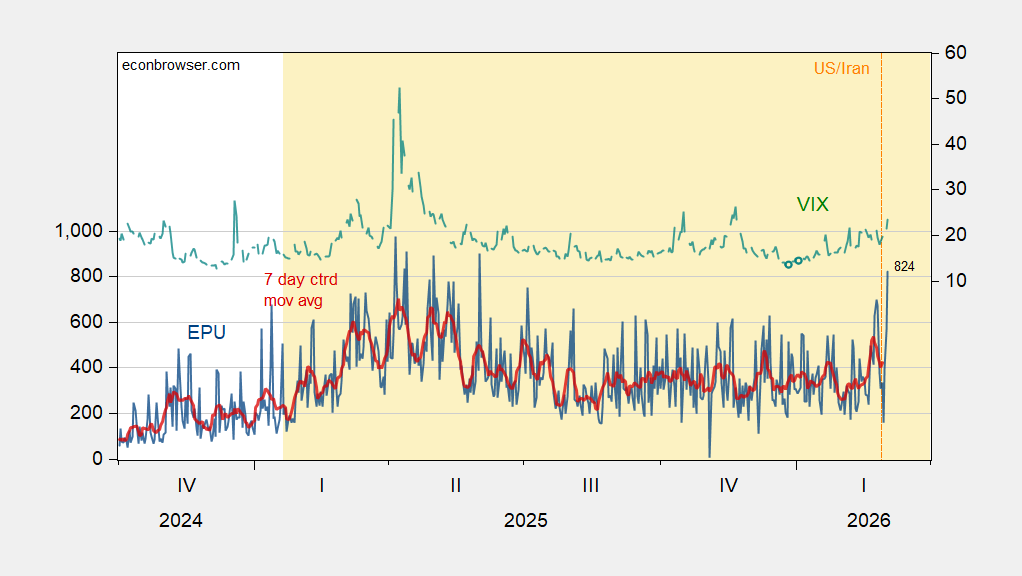
The VIX is not all that high, perhaps because stocks aren’t all that volitile, nor have there been days as bad for stocks in response to the war as, for instance, the day Citrini ‘s AI note came out:
https://fred.stlouisfed.org/graph/?g=1T11s
On the other hand, the oil-price VIX has jumped relative to the equity VIX:
https://fred.stlouisfed.org/graph/?g=1T10b
On the other other hand, margin debt is at a record high:
https://ycharts.com/indicators/finra_margin_debt
That’s just a level for a growing series, so maybe not so bad? Nah, it’s bad. Margin debt relative to GDP is higher than prior to the dot.com collapse. That’s part of the reason the cryptid sell-off was so vicious – lots of leverage. And, of course, the Buffet and Shiller valuation metrics are screaming “Sell! Mortimer, sell!”. So mechanically, explaining the performance of the VIX ain’t hard, but the overall calm of equities is just baffling.
Meanwhile, check what’s happening with the Hang Seng, Kopsi and Nikkei indices. Reliance on MidEast oil has bit them pretty hard.
The poor performance of U.S. shares relative to shares in other developed markets in recent months has been quite notable. Could be that’s changing as a result of the war.
First they say that the Department of Defense should be called the Department of War. And then they say that their war doesn’t need a declaration of war because it is defensive.
I’m trying to keep up but they aren’t making it easy.
A half-baked thought on the duration of the war:
It’s a commonplace in assessing the impact of war that duration matters. The longer war goes on, the greater the human cost, including economic losses.
Press reports today indicate that Iran’s intelligence service got a message to the U.S. asking what it would take to end the war. The White House is reportedly not interested. On the other hand, we know the felon-in-chief wants to keep the war down to about 4 weeks. The inflationary effect and the risk to Republicans at the midterm require keeping the war short. So both sides want to get this over with. That knowledge may be a big factor in financial market performance.
Iran was making concessions to the U.S. in negotiations right up until bombs began to fall, and is asking what concessions would end the war now. Why? To avoid destruction, sure, but what specifically?
I kinda think both sides are calculating what military resources Iran will have when this is over. Getting the U.S. to stop bombing soon would leave Iran with an inventory of missiles. They want that; we don’t. We’ll have daily intelligence estimates about what Iran has left, and may calibrate the end of bombing based on those estimates. Certainly, Bibi wants us to do it that way.
For Iran, U.S. refusal to consider a ceasefire means shoot ’em or lose ’em. So odds are, they’ll fire at the highest possible pace now, because sustainability is not an issue.
Iran’s choice to close Hormuz, after decades of threatening, looks like an effort to maintain credibility, as well as to inflict a cost on its attackers. “See? We weren’t kidding.”
Iran is calculating for what happens after the shooting ends. We won’t send in troops. Israel won’t either. Iran will rebuild, and the Ayatollahs will continue to hold power. Iran is letting us know it’s dangerous when cornered, in an effort to make future attacks less likely.
Israel will have a different set of interests than we have. Also thinking about the longer run, once Iran’s military capacity is eroded, Israel will want to keep it that way. If that means imposing costs on the rest of the world, so be it. Grabbing Kharg Island would change post-war circumstances profoundly for Iran, also for Israel. It would put us in the middle in a way that might not do us much good. It would probably be set up do the felon good, ’cause why not?
Just a guess.