Today, we are pleased to present a guest contribution written by Jamel Saadaoui (Université Paris 8-Vincennes).
Our paper, written with William Ginn and Evangelos Salachas, “Stock Price Bubbles, Inflation and Monetary Policy Surprises,” asks when monetary tightening restrains speculative equity valuations—and when it does not.
A contractionary monetary-policy surprise is normally expected to raise required returns, tighten credit conditions, weaken risk-taking, and reduce the present value of future cash flows. Yet the theoretical and empirical literature is divided. Some studies find that tightening reduces the bubble component of stock prices, whereas others find that it can increase it. We argue that these results can be reconciled by asking a more precise question: in what inflation environment does the policy-related surprise occur?
Using monthly U.S. data from September 1997 to December 2023, several externally identified high-frequency surprises, and linear, time-varying, and state-dependent local projections, we find that the inflation environment changes not only the magnitude but also the sign of the response of speculative equity valuations.
How do we identify a bubble?
Identifying a bubble is inherently difficult because fundamental value is not directly observable. Following Shiller (2015), we use the term to describe episodes in which valuations appear unusually elevated relative to conventional cash-flow and required-return benchmarks and are sustained by investor beliefs and market narratives. We therefore do not rely on a single indicator. Our baseline measure is the Gao and Martin (2021) dividend-yield valuation component, constructed from the Campbell–Shiller price–dividend framework. We then examine whether this component displays episodic explosive behavior using the Phillips–Shi–Yu tests and verify the state-dependent results using the cyclically adjusted price-to-earnings ratio associated with Campbell and Shiller. These complementary measures identify bubble-like speculative valuation episodes rather than claiming that fundamental value can be observed without error.
Why can tightening have opposite effects?
The direct effect of a contractionary surprise remains conventional in both inflation environments: higher current and expected policy rates raise required returns and weaken demand. The additional effect comes from what the policy action reveals about future policy conduct. Even when an instrument surprise contains no favorable private information about current fundamentals, a pre-emptive tightening can lead investors to revise upward the perceived responsiveness of the central bank.
In a low-inflation environment, such an action may be interpreted as insurance against future policy mistakes, an unanchoring of expectations, or a later and more disruptive tightening cycle. Lower policy-error and macroeconomic tail risk can compress required risk compensation, narrow corporate credit spreads, and protect the lower tail of future cash flows even though the short risk-free rate rises. The asymmetry can be summarized as follows:

Here, the first term, Dh(s), captures the conventional valuation drag of a tightening, while the second,ψh(s)λθ(s) , combines the upward revision in perceived policy responsiveness with its effect on policy-error risk, required risk compensation, and downside cash flows. A positive amplification parameter, , maps the resulting valuation signal into speculative demand. In low inflation, the policy-rule signal can outweigh the conventional drag. In high inflation, expected real rates, inflation risk, tighter credit, and the probability of further tightening dominate. The policy rate does not become expansionary; the balance of valuation forces changes with the inflation environment.
Heterogeneous beliefs and limits to short selling help explain why the favorable signal can enter the speculative component. Optimistic investors may emphasize improved future stabilization, while pessimistic investors emphasize the immediate increase in discount rates. When pessimistic views cannot be expressed fully through short positions, optimistic valuations and resale-option motives can receive greater weight in market prices.
The initial signal is different for an explicitly identified central-bank information shock. Favorable information raises the perceived outlook for activity and corporate cash flows. When inflation is low, this news can be capitalized as economic resilience or welcome reflation with a limited expected policy offset. When inflation is high, the same news also implies more persistent monetary restraint and higher required returns, which can mute or reverse the valuation response. The broader FOMC monetary-event surprise used in the paper can contain policy-path, reaction-function, and outlook news, so we interpret it more agnostically.
Empirical design and main results
We distinguish two policy-instrument surprises—the Bauer–Swanson (BSMP) and Jarociński–Karadi (JKMP) measures—from the Jarociński–Karadi central-bank information shock and the broader Acosta et al. FOMC monetary-event surprise. The inflation environment is constructed from the lagged value of a one-sided Kalman-filtered inflation trend, and a smooth transition function assigns observations different weights across low- and high-inflation states. The state is therefore determined using information available before the contemporaneous policy surprise.
The policy-instrument results display a clear sign reversal. In high-inflation environments, contractionary surprises lower expected inflation, widen the BAA corporate–Treasury spread, and reduce the speculative valuation component. In low-inflation environments, the common responses reverse: the BAA spread narrows and the speculative component rises after both policy-instrument surprises. Realized real Shiller earnings rise after the Bauer–Swanson shock but remain weak or negative after the Jarociński–Karadi policy shock, so the most stable common evidence concerns credit conditions and speculative valuations rather than earnings.
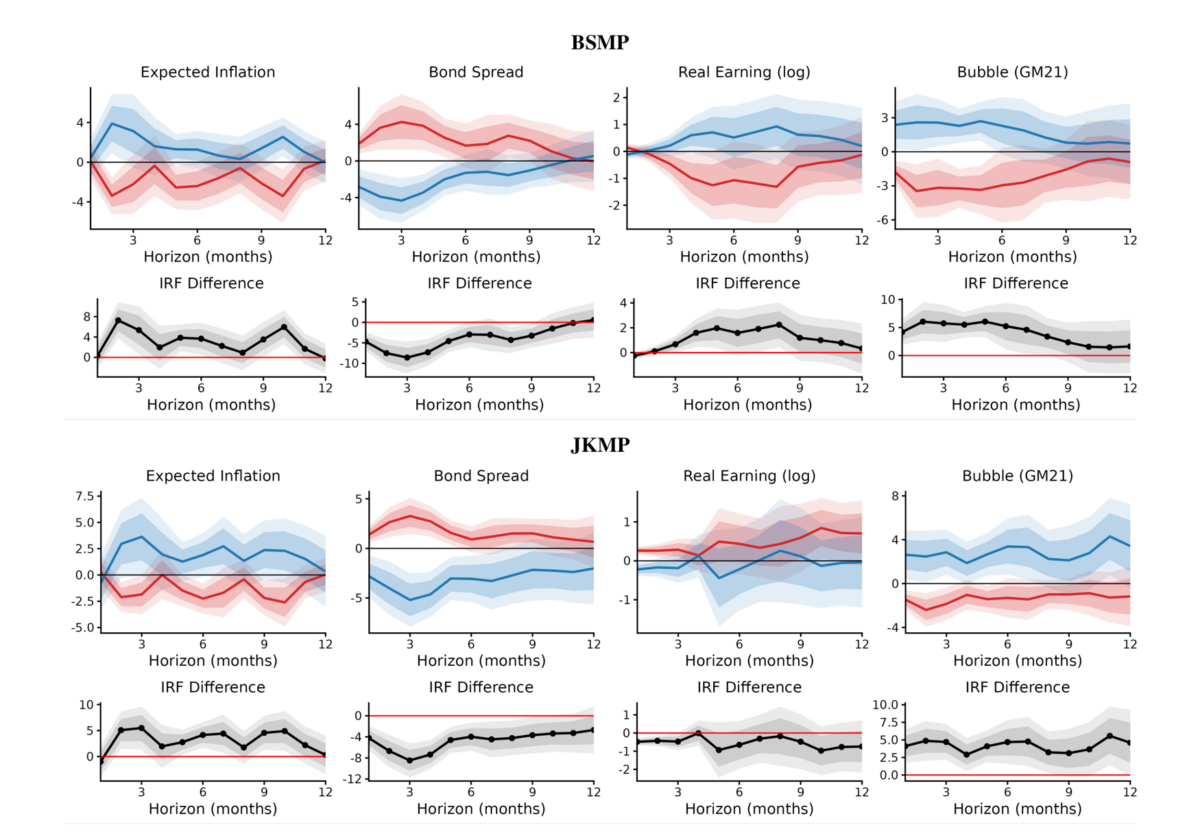
Figure 1. State-Dependent Responses to Policy-Instrument Surprises
Red denotes the high-inflation response, blue the low-inflation response, and the black row the low-minus-high difference. Responses are to one-standard-deviation surprises; shaded areas are 68 and 90 percent Newey–West confidence bands.
The Jarociński–Karadi information shock and the broader FOMC monetary-event surprise show a related inflation-contingent pattern. In low inflation, favorable information or communication news is associated with narrower spreads and higher speculative valuations, although the information-shock response develops with a delay. In high inflation, the speculative response is muted or negative because the expected policy burden and required-return effect become more important.
Reconciling the literature and policy implications
The results reconcile two influential views. The conventional risk-taking view predicts that tighter policy raises required returns, restricts credit, and reduces speculative valuations. We locate this disciplining effect primarily in high-inflation environments. Galí and Gambetti show that tightening can instead increase the bubble component of stock prices. We locate this amplification primarily in low-inflation environments, where contractionary policy-instrument surprises are followed by narrower credit spreads and a larger speculative valuation component.
The policy implication is that the interest rate is not a uniform financial-stability instrument. When inflation is elevated, price-stability and financial-stability objectives tend to align: tightening widens credit spreads and reduces speculative valuations. When inflation is subdued, the same type of surprise can be accompanied by easier credit conditions and higher speculative valuations. Financial-stability assessments should therefore consider not only the direction of the policy surprise, but also the inflation environment and the beliefs generated about future policy conduct, credit conditions, and the macroeconomic outlook.
Selected references
Acosta, M., A. Ajello, M. D. Bauer, F. Loria, and S. Miranda-Agrippino (2025), “Financial Market Effects of FOMC Communication: Evidence from a New Event-Study Database,” Federal Reserve Bank of San Francisco Working Paper 2025-30.
Bauer, M. D., and E. T. Swanson (2023), “A Reassessment of Monetary Policy Surprises and High-Frequency Identification,” NBER Macroeconomics Annual, 37(1), 87-155.
Evgenidis, A., and A. G. Malliaris (2020), “To Lean or Not to Lean against an Asset Price Bubble? Empirical Evidence,” Economic Inquiry, 58(4), 1958-1976.
Galí, J., and L. Gambetti (2015), “The Effects of Monetary Policy on Stock Market Bubbles: Some Evidence,” American Economic Journal: Macroeconomics, 7(1), 233-257.
Gao, C., and I. W. Martin (2021), “Volatility, Valuation Ratios, and Bubbles: An Empirical Measure of Market Sentiment,” Journal of Finance, 76(6), 3211-3254.
Jarociński, M., and P. Karadi (2020), “Deconstructing Monetary Policy Surprises: The Role of Information Shocks,” American Economic Journal: Macroeconomics, 12(2), 1-43.
Phillips, P. C. B., S. Shi, and J. Yu (2015), “Testing for Multiple Bubbles: Limit Theory of Real-Time Detectors,” International Economic Review, 56(4), 1079-1134.
Scheinkman, J. A., and W. Xiong (2003), “Overconfidence and Speculative Bubbles,” Journal of Political Economy, 111(6), 1183-1220.
Shiller, R. J. (2015), Irrational Exuberance, revised and expanded third edition, Princeton University Press.
This post written by Jamel Saadaoui.
Not happy with this one. Putting aside my objection to a summary more dense with jargon than the actual paper, I see language being used to get away with unfulfilled promises. There are things that look like claims of causation, but causation isn’t clearly shown.
The article seems to imply that monetary policy can be effective in deflating the bubble only when easy money is a cause of the bubble. I say seems; I wish the author had written more clearly, so I could know.
The paper also raises the possibility that monetary tightening can inflate a speculative bubble, and promises to enlighten us:
“Some studies find that tightening reduces the bubble component of stock prices, whereas others find that it can increase it. We argue that these results can be reconciled by asking a more precise question…”
I can glean from the text and Figure 1 in this article – Figure 9 in the paper – that bubbly behavior can persist and worsen after tightening in a low-inflation environment. I don’t see evidence of causation. There’s lots of jargon implying channels for causation, but is there evidence? Do “reconciled” and “asking a more precise question” amount to bait-and-switch with regard to causation?
This is from the paper itself:
“In a low-inflation environment, a pre-emptive tightening can increase the perceived responsiveness or effectiveness of the central bank, reduce policy-error risk, and compress required risk compensation. These indirect benefits can dominate the conventional discount-rate effect, while extrapolative beliefs or greater risk-taking amplify the rational revaluation into the measured speculative component.”
“Can” seems to be doing most of the work here. We might substitute “could, one supposes” for “can” and get closer to reality. I’d be much happier with a forthright admission that the evidence shows two bubbly states – high and low inflation – but not causation in the low-inflation state.
Figure 2 from the paper is the “Gao–Martin Speculative Valuation Component” which shows just two episodes of speculative bubbles in the period studied, both equity bubbles. The mortgage bubble doesn’t count? Just because you don’t have an easy series that gets at mortgages?
The paper creates a bunch of data points by using individual Fed announcements as events – a common practice, I realize – but that restricts the number of bubbles to those after the Fed got chatty. That’s just two bubbles, one inflationary and one not. Ignoring the mortgage bubble, going through some extraordinary grooming of equity data and turning Fed text into “shocks” while ignoring mortgages just seems too much an exercise in generating results.
The authors don’t consider that some third factor may be at work in generating bubbles. There appears to be a step up in the Shiller P/E, or perhaps an upward trend, starting around 1995-2000. That suggests a structural change. Labor’s share of national income has been heading lower since around 2000, a clear structural change. I recall posting a link to a paper which argued that the most important factor in equity returns is changes to labor compensation. Sorry I can’t find it now. Anyhow, only two bubbles, one early in this structural change, one late, seems like a problem.
I don’t object to using data to confirm common-sense notions. Sure, an inflation-fed bubble is probably different from other bubbles. Sure, the Fed probably has more control over an inflation-fed bubble than other kinds. All the chit-chat aimed at suggesting the Fed can feed a non-inflationary bubble by tightening seems to stretch beyond what the authors can justify.
Here’s a bit more common sense: In a low-inflation environment, Fed tightening will be more limited than in a higher-inflation environment, so there’smore deflating of bubbles when the Fed fights actual inflation. Is there hard evidence for other effects than that one in the paper’s results? Seems like naming possible other effects is as close as the authors come.
I don’t think my intelligence level is high enough to analyze the paper as well as you have (not being facetious or sarcastic, just telling on myself). But here is my 4 year bachelors joe six pack observation/question:
Paper authors’ pose: “In a low-inflation environment, a pre-emptive tightening…… buhduh buhduh buhduh…… ”
In what Disneyland/fantasy land/Dollywood/ Universal Studios Park world has the Fed Chair or FOMC ever played such a stunt/ rate move?!?!?!?!?
Perhaps this “low-inflation environment, a pre-emptive tightening” happens in the same world we will find the proverbial bearded lady hanging out.
Thank you for the detailed comment. The criticism that the initial blog version was too dense is fair, and we have shortened it. However, the claim that the paper does not identify a causal response rests on a misunderstanding of the empirical design.
The paper does not claim that inflation causes a bubble, that “easy money” must have created the bubble, or that tightening works only against bubbles caused by monetary accommodation. Those are different questions from the one we study.
Our treatment variable is an externally identified monetary-policy surprise. The inflation environment is a predetermined variable that conditions how this shock is transmitted. In other words, we estimate the effect of an unexpected contractionary policy innovation when it occurs in a low-inflation environment and compare it with the effect of the same type of innovation in a high-inflation environment.
The Bauer–Swanson policy surprise is constructed from high-frequency financial-market movements and is orthogonalized to remove the Federal Reserve’s systematic response to economic news. The Jarociński–Karadi measure independently separates policy-instrument shocks from central-bank information shocks. These are not textual classifications invented from Fed statements. The Acosta et al. communication measure is an additional robustness series, not the sole basis of identification.
The inflation state is constructed from the lagged value of a one-sided Kalman-filtered inflation trend. It therefore uses only information available before the policy surprise and cannot be changed contemporaneously by that surprise. Because the state is predetermined, conditioning the externally identified shock on that state does not make the shock endogenous.
Under the standard identifying assumptions behind these published high-frequency shock series, the paper therefore identifies the causal dynamic response to a monetary-policy innovation within each inflation environment. What it does not claim to identify is the causal effect of exogenously moving the economy from low inflation to high inflation while holding every other feature of the economy constant. Confusing these two estimands is the source of much of the disagreement here.
The state comparison is also not obtained by simply looking at two curves. In Figure 9, the black rows report the estimated low-minus-high response, together with confidence bands. The paper therefore estimates and reports the state difference directly.
The use of “can” in the conceptual discussion should also not be read as a retreat from the empirical result. The word refers to the economic condition under which the conventional valuation drag from higher rates is outweighed by the benefit associated with greater perceived policy responsiveness and lower risk compensation. The empirical finding itself is not merely hypothetical: across two independently constructed policy-instrument measures, the speculative valuation component rises following a contractionary surprise in the low-inflation state and falls in the high-inflation state.
This is more than the observation that tightening is usually smaller when inflation is low. The impulse responses are normalized to a one-standard-deviation identified surprise. Moreover, a smaller conventional tightening effect might explain a smaller widening of credit spreads. It does not explain why the estimated BAA corporate–Treasury spread narrows after a contractionary surprise in the low-inflation state while widening in the high-inflation state. The sign reversal in credit conditions and speculative valuations is precisely the hard evidence that motivates the conceptual framework.
There is also a misunderstanding about the number of bubbles in the analysis. Figure 2 is not a binary dating exercise that supplies only two observations. It is a continuous monthly speculative-valuation measure over the entire 1997–2023 sample. The paper additionally applies the Phillips–Shi–Yu recursive right-tailed tests, which detect recurrent periods of explosive behavior, including episodes around the early 2000s and the Global Financial Crisis. We also reproduce the state-dependent results using the CAPE ratio as an alternative valuation measure.
The mortgage bubble is not “ignored” in the sense suggested. The paper studies speculative equity valuations, not housing prices or mortgage credit. A direct study of the mortgage bubble would require a different outcome variable, a different valuation benchmark, and probably a different empirical model. The Global Financial Crisis is nevertheless fully contained in our sample, and the equity valuation measure and recursive explosiveness tests display pronounced dynamics around that period. Criticizing an equity-bubble paper for not treating mortgage valuations as the dependent variable conflates two different asset markets.
Nor do FOMC announcements “create” additional bubble observations. The announcement windows provide exogenous variation in the policy treatment. The outcome remains a monthly continuous equity-valuation series. The number of monetary-policy events and the number of speculative episodes are conceptually distinct.
The proposed structural-change explanation does not invalidate the identification either. A secular change in labor’s income share, the level of the CAPE ratio, or the composition of listed firms may affect the long-run level of equity valuations. But a slow-moving structural trend cannot, by itself, explain a systematic response immediately following an externally identified announcement-window surprise unless it is correlated with that surprise. The purpose of high-frequency identification is precisely to isolate the unexpected policy innovation from such pre-existing macroeconomic developments.
The paper also allows the transmission coefficient to evolve over time through time-varying local projections, reproduces the main state-dependent result in the pre-pandemic sample, and obtains similar qualitative results with CAPE. These exercises directly address the idea that the findings merely reflect one late-sample structural break or the COVID episode.
Finally, the conceptual framework is not a bait-and-switch. The causal empirical result is the inflation-contingent response to the identified policy shock. The framework explains why that response can change sign. In low inflation, a pre-emptive tightening may raise perceived central-bank responsiveness, reduce policy-error and macroeconomic tail risk, compress required risk compensation, and narrow credit spreads. In high inflation, the expected restrictive policy path, higher required returns, tighter credit, and weaker demand dominate. The observed responses of expected inflation, corporate credit spreads, realized real earnings, and the speculative valuation component provide empirical discipline for this explanation.
One can reasonably debate the preferred measure of speculative valuation or the most persuasive economic interpretation. But describing the paper as an analysis of only two bubbles with no causal identification does not accurately represent either the data or the research design.
Well, you certainly have succeeded in cutting out the jargon in your response.
This seems like a PhD-language version of “Nuh Uh! Did not!”
I’m clearly not your target audience. I hope Menzie’s students find value here.
Thank you for your response Macroduck, I recognize that it is a bit jargonesque. It is also because it is the summary of an academic paper. I will think about to adapt the message to a different audience.