The pressure is impacting long-dated bonds around the world, due to the same concerns about the oil-driven inflation shock and government spending. Germany’s 30-year yields touched the highest since 2011, and the equivalent UK rate rose to a level last seen in 1998. Australian peers set a fresh record high in data going back to 2016, while the yield on a Bloomberg index of global sovereign bonds climbed the highest in almost two decades.
It’s a movement up along most of the curve:
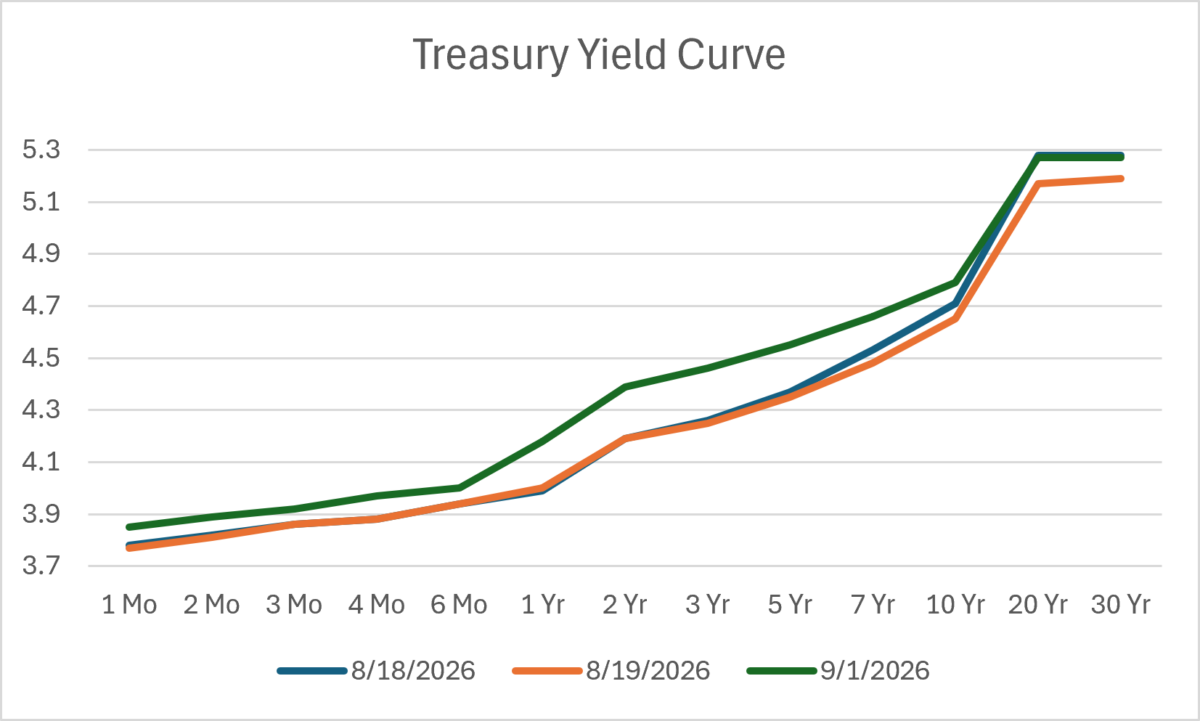
Figure 1: Yield curve as of 8/18 (blue), as of 8/19 (orange), as of 9/1 (green), all in %. Source: Treasury.
Well, for the oil induced inflation shock, we can thank Trump’s war of choice. For the debt issue, one might be tempted to say we’d be facing this problem without Trump. True to some extent, but the OBBBA is to blame for blowing a big hole in our finances, accelerating the pace of debt accumulation (along with on again off again tariffs).
“Germany’s 30-year yields touched the highest since 2011”
The 10-year rate is close to 3.4% a rate not seen since 2009.
the fed’s John Williams came out today and said that the recent rise in yields was due to a strong economy. not because of inflation or bond vigilantes. he wants to shut the door on an interest rate increase before the election, I guess. good thing the rest of the world is also in such a robust economy, given their yield increases as well. me thinks mr. Williams is trying to curry favor with trump. maybe he committed mortgage fraud as well?
Weasel words. Both inflation and inflation expectations have been above the Fed’s target for several years, but haven’t risen enough to account for all the recent rise in yields. So in a bond-math kind of way, he can focus on, say, the period since the war of choice started, and argued that inflation isn’t the cause of the rise in yields. His “strong economy, not bond vigilantes” claim is harder to square with the facts. Term premiums are up, as are expectations for rate hikes. He has to be claiming that the term premium rise is all due to private credit demand, none due to public credit demand. What evidence, one might ask, can possibly make that claim true?