As noted earlier, Stephen Moore has a dearth of peer-reviewed publications; however, he has coauthored work purporting to be analytical. One of these is these is the Economic Outlook ranking published by the American Legislative Exchange Council (ALEC). In Rich States, Poor States, 2015:
“[I]t’s a big IF that soybeans futures are LONG TERM predictors at all.”
AKA CoRev Memorial Post. The quote is from CoRev, and motivated a July 15 post that contained this graph:
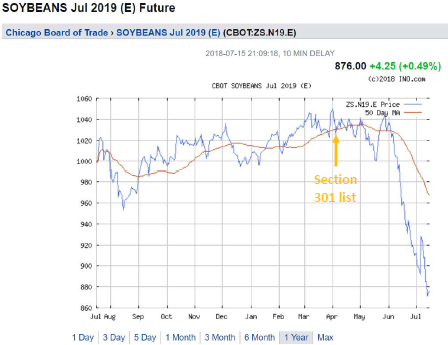
Figure 1: Soybean futures for July 2019. Source: ino.com.
Stop Stephen Moore
From being appointed to the Fed. Here is a non-exhaustive recounting of Moore’s reign of error.
Glenn Rudebusch on “Climate Change and the Federal Reserve”
It doesn’t get much more real than this, when the Fed has to take into account the implications of global climate change. Glenn D. Rudebusch, senior policy advisor and executive vice president at the Federal Reserve Bank of San Francisco, lays out the issues in this letter.
RV Sales Decline 40% Jan. 2019 vs. Jan. 2018
I have no idea if they’re a particularly good predictor of recessions, but January sales have fallen 40% relative to a year previous…
“Workshop on International Capital Flows and Exchange Rates”
Central Bank of Ireland – ECB and IM-TCD
Workshop on:
International Capital Flows and Exchange Rates
CALL FOR PAPERS
Venue: Trinity College Dublin, Ireland
Date: September 6th, 2019
On Kansas: Prognostications from Five Years Ago
Whether due to Brownback or other factors, Kansas is doing very well.
Guest Contribution: “Xi and Trump Miss a Chance to Expand Markets”
Today, we present a guest post written by Jeffrey Frankel, Harpel Professor at Harvard’s Kennedy School of Government, and formerly a member of the White House Council of Economic Advisers. A shorter version appeared in Project Syndicate on March 21st.
Why Haven’t Soybean Futures Recovered?
As Brad Setser noted last month, US, Brazilian and Argentine soybean prices have converged, suggesting the end of arbitrage profits.
Glasnost In Wisconsin
After a hiatus of nearly 4 years, the Wisconsin Department of Revenue has resumed publication of the Wisconsin Economic Outlook, as of yesterday.