As noted earlier, in the aftermath of the 2012 election, the Republican Party dedicated itself to reaching out to Asian Americans (in addition to other ethnic groups). Thus far, the progress appears to be limited.
Category Archives: Uncategorized
Confirmed: Kansas as Leader of the Pack
The Philadelphia Fed today released leading indices for the 50 states and the US. Kansas records the largest projected six-month decline in activity (after recording the largest in the Nation three month decline through August).
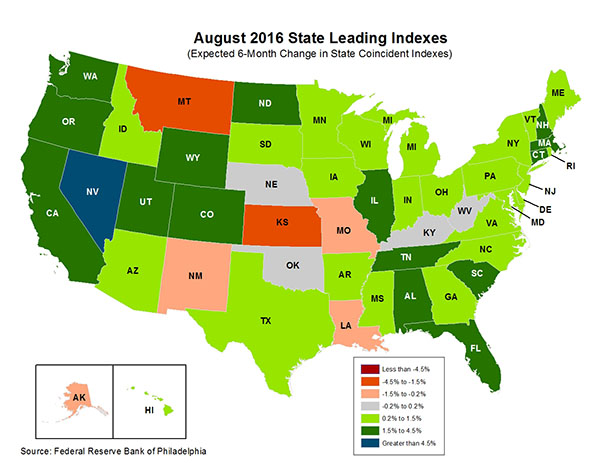
Source: Philadelphia Fed leading index page.
Continue reading
Wisconsin Employment for July
With update 8/23 showing application of same methodology to Doyle administrations.
DWD released data today. Wisconsin private employment in July is estimated to equal what we earlier thought it was in June…
Does the Aerospace Decline Explain the Kansas Collapse?
Ironman at Political Calculations thinks so. Unfortunately, in his calculation of Kansas GDP excluding agriculture and manufacturing, he made an error by simply subtracting (chain weighted) real agricultural output and real manufacturing from real GDP (as discussed in the addendum to this post; note that Ironman has never to my knowledge acknowledged this error). I’ll re-examine the importance of the shocks to the aerospace industry in Kansas to the slow pace of Kansas growth by looking at contributions to GDP growth, and contributions to employment growth.
Does Drought Explain the Kansas Collapse?
Ironman at Political Calculations asserts it does. Unfortunately, he makes a mistake in calculating Kansas GDP ex.-agriculture by simply subtracting chained agriculture from chained state GDP (discussed in the addendum to this post). Here in Figure 1 is properly calculated GDP ex.-agriculture plotted against a drought index (lower values is a more severe drought).
Brexit Fallout: Consumer Confidence Collapses
From GkF on Friday:
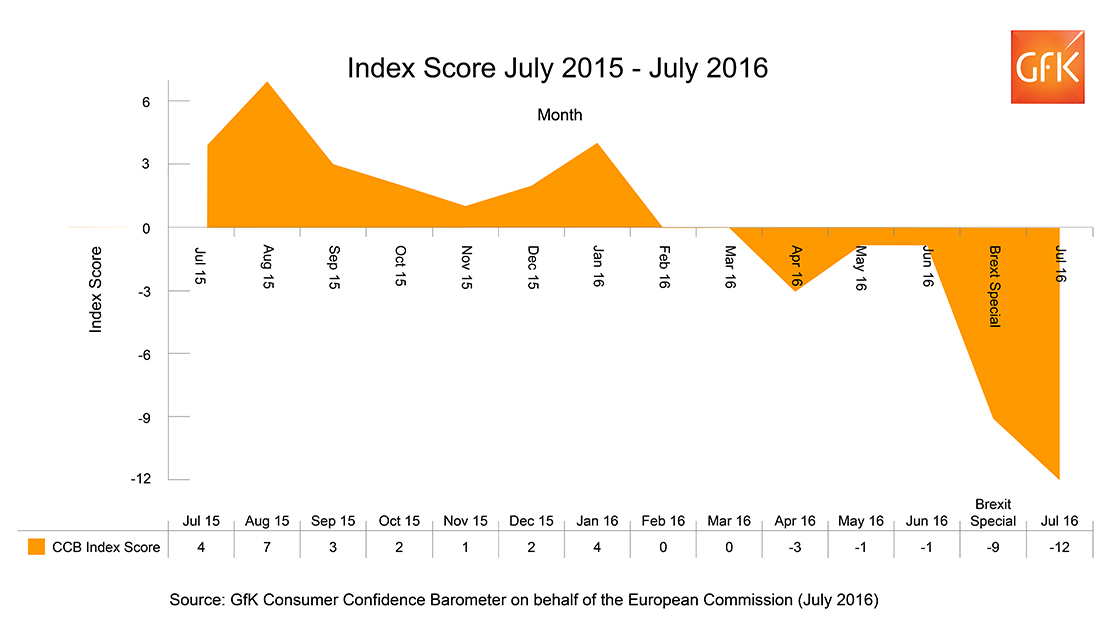
GfK’s long-running monthly Consumer Confidence Index dropped 11 points in July (since the June interviews conducted before the Referendum) from -1 to -12. The survey dates back to 1974 and July sees the sharpest month-by-month drop for more than 26 years (March 1990). This is also a further 3-point drop from the -9 recorded by the Brexit Special in early July. All five measures used to calculate the Index saw decreases this month.
Update, 8/2 1:45am Pacific: And here is measured policy uncertainty in the UK.
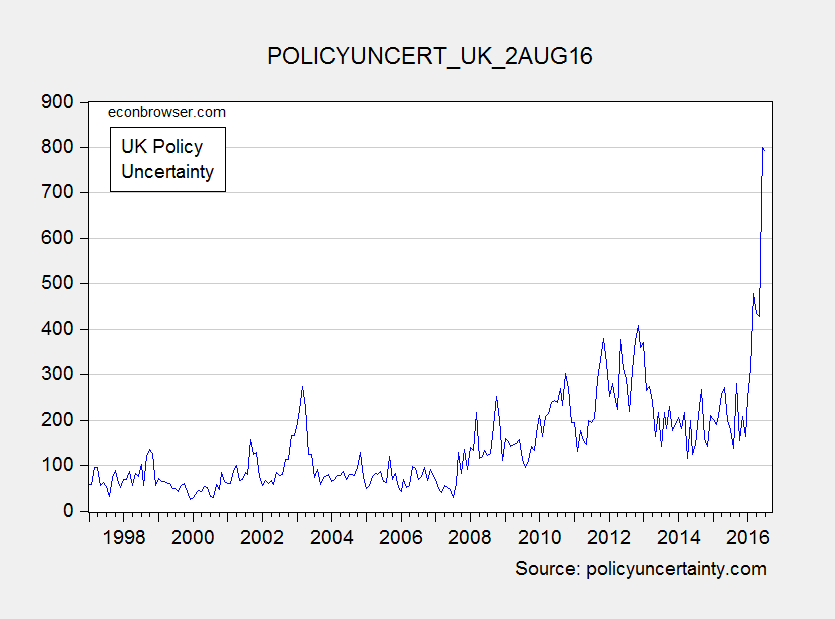
Figure 1: UK Policy Uncertainty. Source: policyuncertainty.com accessed 8/2.
Anemic economic growth
The Bureau of Economic Analysis announced today that U.S. real GDP grew at a 1.2% annual rate in the second quarter. Not good news.
Continue reading
Guest Contribution: “Trump Jr.’s Pants-on-Fire Allegation of Manipulated Jobs Numbers”
Today, we present a guest post written by Jeffrey Frankel, Harpel Professor at Harvard’s Kennedy School of Government, and formerly a member of the White House Council of Economic Advisers.
“Central Banks at a Crossroads: What Can We Learn from History?”
That’s the title of a book commissioned by the Norges Bank on the bicentennial of the Bank’s founding, and edited by Michael D. Bordo, Øyvind Eitrheim, Marc Flandreau and Jan F. Qvigstad (published by Cambridge University Press). Here’s the table of contents:
Chinn-Ito Financial Openness Index Updated to 2014
The Chinn-Ito index revised and updated to 2014 is now available here.