I don’t have the answer, but the two series do make quite a picture (all in logs since five years ago):
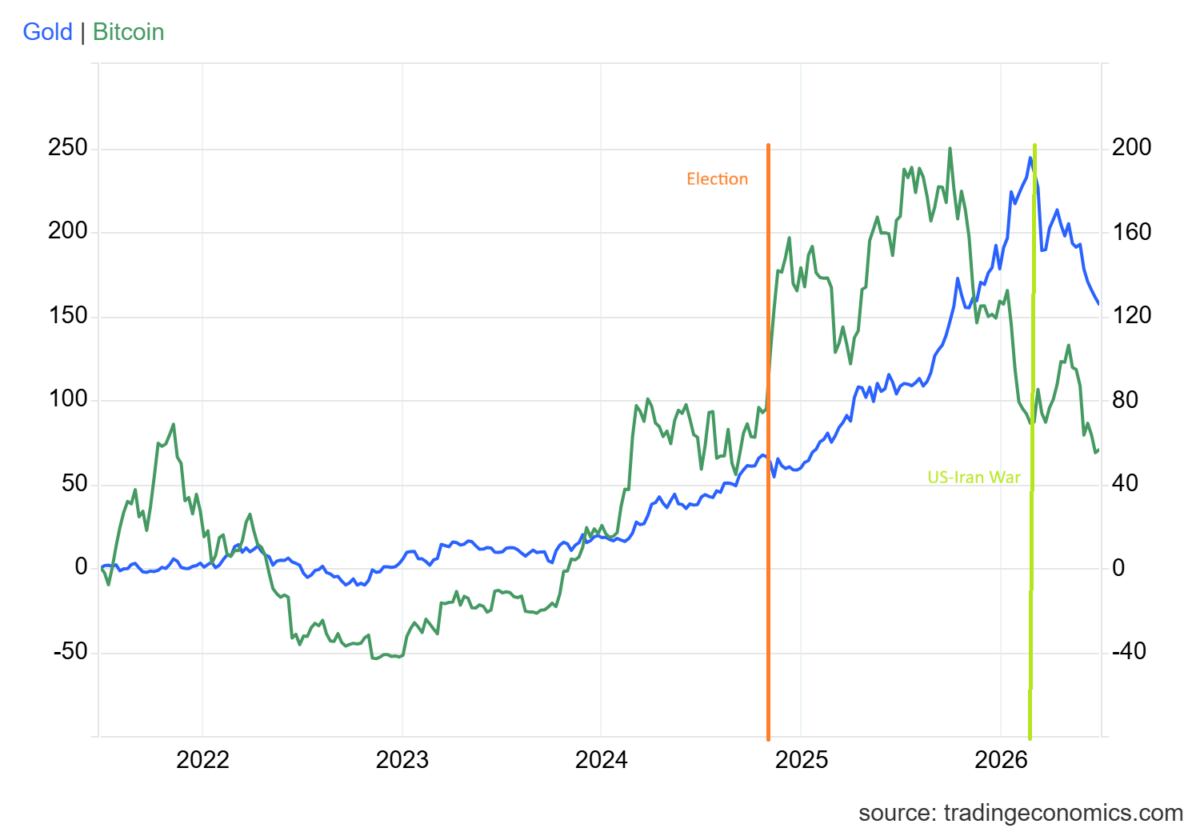
Figure 1: Log difference from 6/29/2021 in bitcoin (green, left scale), in gold (blue, right scale). Source: TradingEconomics.com.
On equities, note the Nasdaq is down, while the SP500 is below peak, but not yet falling drastically.
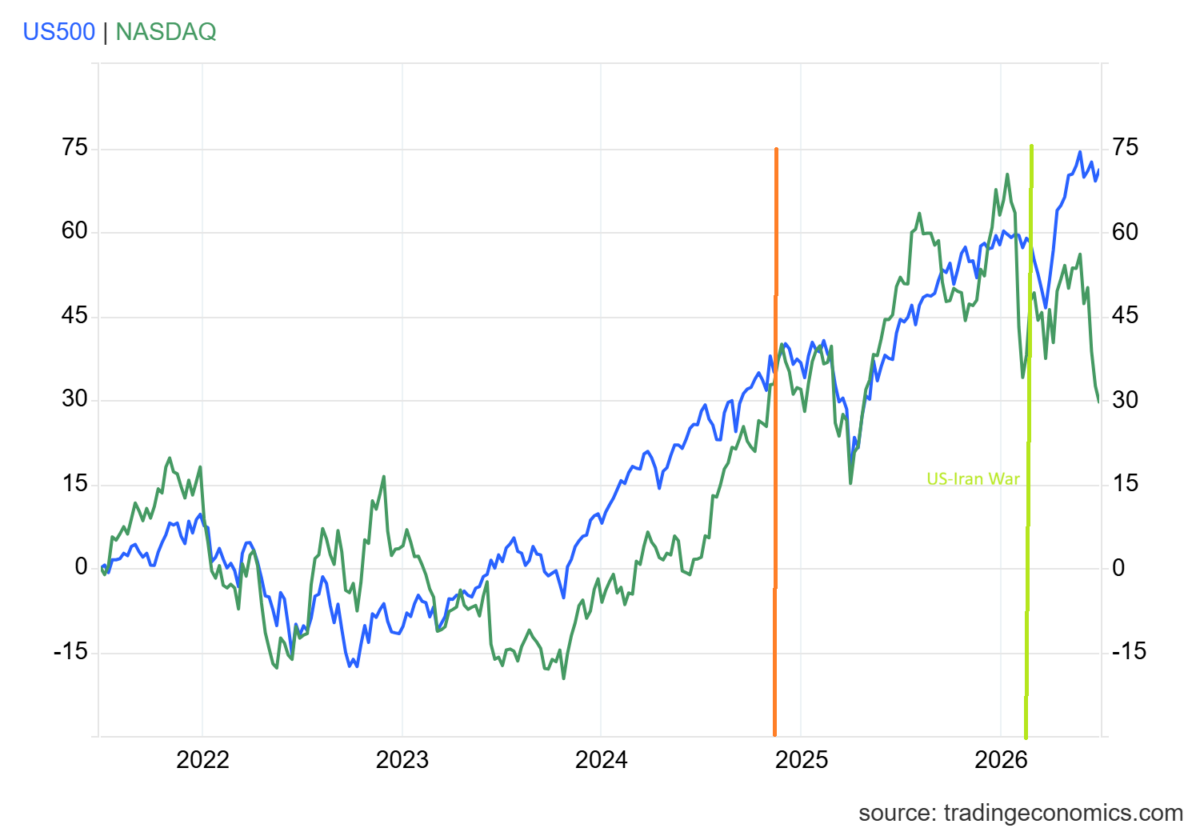
Figure 2: Log difference from 6/29/2021 in Nasdaq (green), in SP500 (blue). Source: TradingEconomics.com.
For economists, a bubble occurs when the price deviates from the present discounted value of the returns from an asset (including being able to evade regulations, taxation, etc.); that is when the discounted expected price in the infinite future does not equal zero. There are other looser descriptions of bubbles. You could call those Shillerian “fads”, etc.
Anyway, I’m going to say that some of these asset prices are looking like they’re coming down, for whatever reason.
tech, and in particular AI spending, seems to be causing some angst. spaceX, which is really an AI and datacenter play in addition to satellites and spaceships, just issued a boatload of debt. I have not been sure that these AI businesses can cover the cost of buildout and energy for AI. not surprising the nasdaq is falling.
Speaking of not having answers – dollar/yen rate oddity:
https://fred.stlouisfed.org/graph/?g=1WZNK
The oddity is about 2 years old now – not new, but getting odder every day. Over the past two year, the U.S./Japan overnight rate differential has turned against the dollar, first because of Fed cuts, more recently due to BoJ hikes, but the yen continues to weaken against the dollar. There’s a similar picture in ten-year rates vs USD/JPY.
Obviously, the yen is trading on something other than rate differentials. It isn’t the S&P vs the Nikkei:
https://www.justetf.com/en/asset-comparisons/index-comparisons/sp-500-vs-nikkei-225
Maybe the AI boom? If so, it’s not all that clear from stock index performance. Here’s the Philly Semiconductor Index vs the Nikkei:
https://fred.stlouisfed.org/graph/?g=1WZOb
They look like twins.
Index performance isn’t the same as money flow, so the Nikkei outperforming the S&P and paralleling the SOX isn’t the whole story. The U.S. equity market represents about 80% of global equity cap, so getting in on the AI party probably means buying USD.
Problem is, it’s the yen side of the pair that’s behaving oddly, not the dollar side. The yen is weak against the euro and sterling and you name it. Rates rising, stocks doing well, currency relentlessly weak across the board.
There’s the fiscal story, what with Japan being heavily indebted, demographically challenged and re-arming, but so’s everybody and Japan has a current account surplus.
I’m flummoxed. Have been for the better part of 2 years.
There is a sensible notion that Fed liquidity drives equity performance.* Here’s a picture of net Fed liquidity and y/y % change in the S&P:
https://fred.stlouisfed.org/graph/?g=1WZQb
Not bad. I can only get FRED to cough up data from 2017, and a couple of big events since then obscure the pattern – the Covid recession and “Liberation Day”. Still, you can look past those and see what’s happening – liquidity and stock performance line up pretty well.
Right now, Fed liquidity is down from a year ago, while the y/y S&P gain is quite strong – contrary to this liquidity notion and to history. What the picture doesn’t show is expectations of Fed liquidity, and expectations matter. The current priced-in expectation is for less net liquidity – bad for stocks.
By the way, expectations of lower liquidity should be particularly bad for stocks for which earnings are mostly in the future. Think in bond terms. In the bond market, securities with far-off earnings flow have long duration. The longer the duration, the greater the sensitivity to variability in the cost of funds. The Nasdaq – laden with high-debt, low-current-earnings giants with hopes of a dazzling future – should show greater sensitivity to changing rate policy and policy expectations than the S&P or the NYSE, and it does.
Putting interest rate sensitivity aside, it might be useful to look at equity index performance in terms of standard deviation rather than % change. An index that gains 20% in a year is not doing all that badly when it then looses 7%, compared to an index which gains 10%, then looses 7%.
*Often this liquidity relationship leads to the mistaken claim that the Fed has a policy of rescuing the stock market. Not quite right. It rescues the money and credit markets; stock rescue is a side effect.
On the other side of the liquidity issue is margin debt:
https://archive.is/1umGd#selection-553.0-553.77
The WSJ reports a 54% y/y increase in margin debt as of May, based on FINRA data. Here’s FINRAs margin debt data:
https://www.finra.org/rules-guidance/key-topics/margin-accounts/margin-statistics
Here’s the picture:
https://en.macromicro.me/charts/415/us-margin-debt
At the same time, leveraged ETFs are adding to stock market leverage. Back to the WSJ:
“Buyers ranging from hedge funds to teenagers on Robinhood have poured money into leveraged ETFs this year, helping to nearly double the assets in these funds to a record $220 billion between March 30 and June 3, according to FactSet.”
The concern, of course, is that the same leverage which amplified stock gains can amplify losses. Rate hikes figure in here, as well.
Are you comparing the value of a company (NASDAQ– ticker NDAQ) vs value of index SP500 in second graph?
Andy: Yes.
so trump lost the birthright citizenship argument he made. the constitution is very clear on this issue, and the majority of the Supreme Court appear to have actually read the constitution and understood what is says. but what does that say about the three conservatives who voted against birthright citizenship? why are they ignorant of the constitution? and a fourth, Kavanaugh explicitly argued it was not the constitution but federal law that supported birthright citizenship. so he voted correctly, but still showed ignorance of the constitution. can we make the supremes take a basic knowledge test on the constitution? seems that should be one of the requirements for a seat on the court. Alito, Gorsuch and Thomas are simply ignoramus judges, and an embarrassment to the bench.