Aggregate nonresidential investment has surged despite elevated interest rates. The aggregate conceals the mixed.
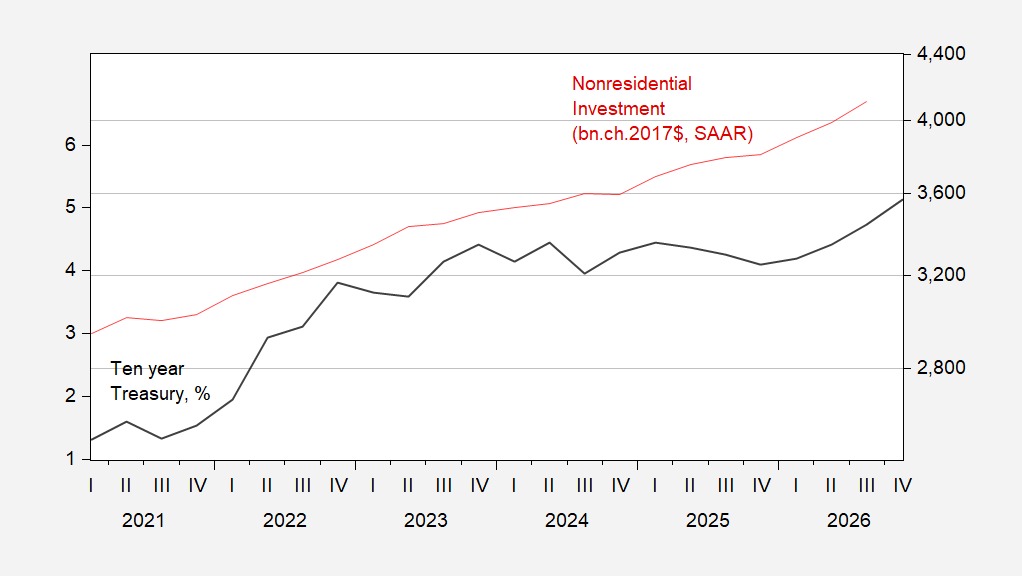
Figure 1: Ten year Treasurys, % (black,left scale), nonresidential fixed investment, bn.Ch.2017$ SAAR (red, right log scale). Source: Treasury, BEA.
Components related to the AI boom have continued to grow relatively unabated:
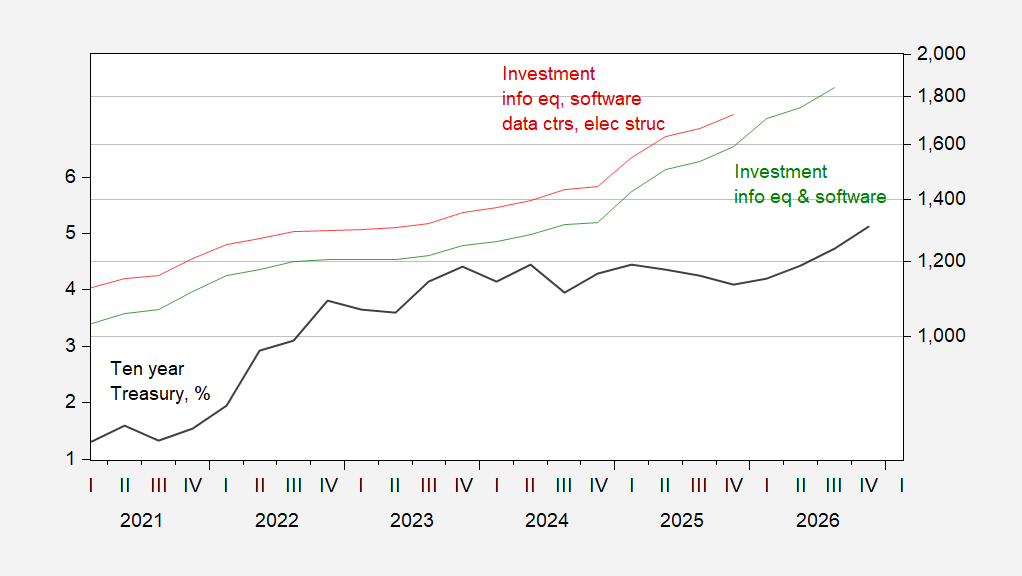
Figure 2: Ten year Treasurys, % (black,left scale), information equipment and software investment, bn.Ch.2017$ SAAR (green, right log scale),information equipment, software, data center and electric power structures investment, bn.Ch.2017$ SAAR (red, right log scale) . Data center and electric power structures investment linearly interpolated from annual data. Source: Treasury, BEA.
Notice that information equipment and software growth continues relatively unabated through 2026Q3.
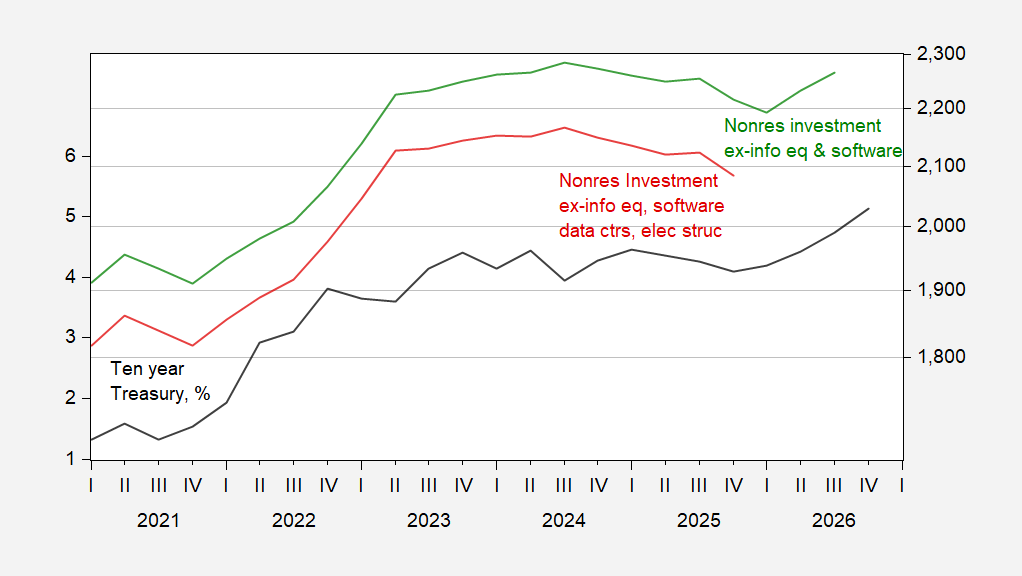
Figure 3: Ten year Treasurys, % (black,left scale), nonresidential ex-information equipment and software investment, bn.Ch.2017$ SAAR (green, right log scale), nonresidential ex-information equipment, software, data center and electric power structures investment, bn.Ch.2017$ SAAR (red, right log scale). Data center and electric power structures investment linearly interpolated from annual data. Source: Treasury, BEA.
In contrast, nonresidential investment excluding the AI-related components is below recent peak.
This two speed capex behavior is reflected in the total returns in the Bloomberg Mag-7 index vs. SP500 overall (itself heavily weighted to AI related stocks now).
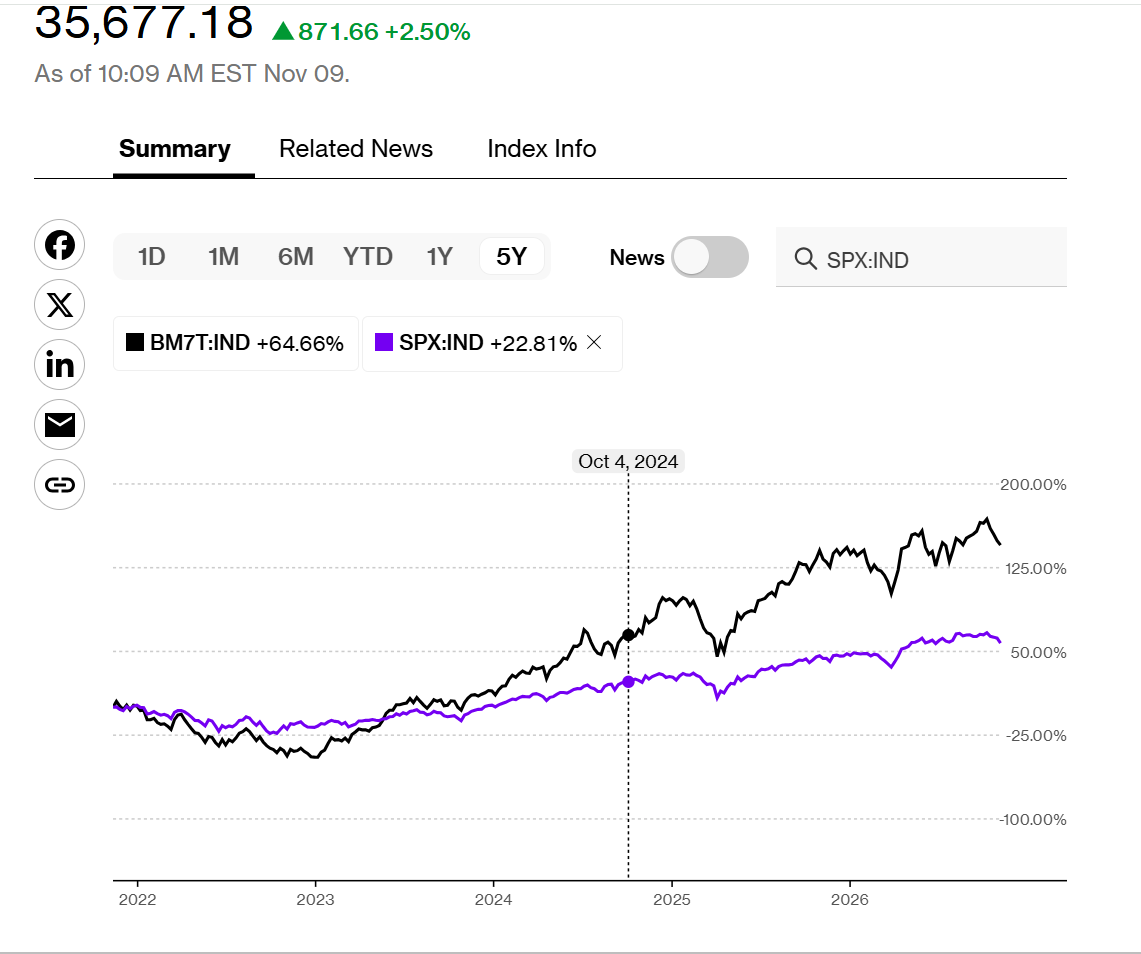
Source: Bloomberg, accessed 11/9/2026.
As noted in a previous post, as the hyperscalers move further into tapping debt markets for financing capex, interest sensitivity for AI-related capex should increase, perhaps dramatically.
If this interpretation is correct, then monetary policy — at least implemented by way of higher rates — will have a greater impact on output going forward.