“The Great Wall of China is 13,000 miles long!”
— Donald Trump, 6:25PM Central time, 10/28/2015
Category Archives: Uncategorized
“Collapse and Revival : Understanding Global Recessions and Recoveries”
That’s the title of a new book by Ayhan Kose and Marco Terrones, just released.
To what problem is this legislation a solution to?
People with concealed weapon licenses would be allowed to carry guns inside the buildings and classrooms of Wisconsin’s public universities and colleges under a bill introduced Monday by two state legislators.
Common factors in commodity and asset markets
Increases in oil production in the United States and the Middle East were certainly key factors in the huge drop in oil prices over the last year. Nevertheless, one can’t help but be struck by the fact that the weekly changes in oil prices correlate with dramatic moves in other commodity and financial markets.
Continue reading
“Global warming is a total, and very expensive, hoax!”
Source: Donald J. Trump, 6 December 2013.
Here’s some data: Global surface anomaly, year-to-date (June):
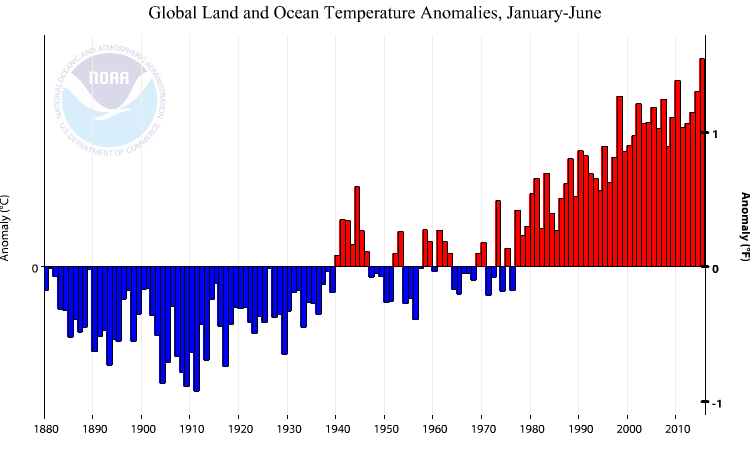
Source: NOAA
Short Term Economic Prospects in Kansas
Philadelphia Fed coincident indices for Kansas have been revised downward, along with forecasts.
Norms for Employment Growth in Recoveries
Re-visiting Mitt Romney’s “We should be seeing numbers in the 500,000 jobs created per month.” [1]
Wisconsin GOP Targets Faculty Tenure
From Greg Neumann/WKOW:
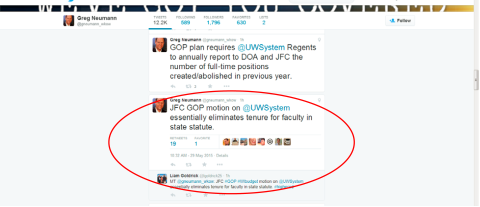
“JFC” is Joint Finance Committee. The text of the motion is here. Stein and Herzog/Journal Sentinel here. The article notes the following contrast: “Minnesota raised taxes with part of the new revenue set aside for higher education.”
Guest Contribution: “Asia Games: Not Zero-Sum”
Today we are fortunate to have a guest contribution written by Jeffrey Frankel, Harpel Professor of Capital Formation and Growth at Harvard University, and former Member of the Council of Economic Advisers, 1997-99. An earlier version of this post appeared at Project Syndicate.
Some Conjectures Regarding the Effectiveness of Economic Boycotts
The events surrounding the signing into law of Indiana’s Religious Freedom Restoration Act provide an interesting test case to see if boycotts, or threats thereof, can successfully induce policy changes. I find this an interesting analogue to the ongoing debate whether Western sanctions, particularly “smart sanctions” imposed on Russia, can have an impact.