Music composed by Laura Schwendinger, libretto by Ginger Strand.
Author Archives: Menzie Chinn
The Kansas Palmer Drought Severity Index, Unit Roots, and Snakes in a Room
In my post on modeling the Kansas economy, Rick Stryker takes me to task for modeling the Palmer Drought Severity Index (PDSI) for Kansas as an I(1) process:
I wouldn’t bother with the ADF test, since its null is non-stationarity and it has low power to reject. I would focus on the KPSS, since its null of stationarity is almost certainly what’s really true.
The Year in Review, 2016: The Triumph of the Blowhards
Last year’s recap was subtitled “Ascent of the Blowhards”. Let’s hope the triumph is only temporary, and rational policy analysis once again becomes a valued commodity.
Guest Contribution: “Demonetization on Five Continents”
Today, we present a guest post written by Jeffrey Frankel, Harpel Professor at Harvard’s Kennedy School of Government, and formerly a member of the White House Council of Economic Advisers. A shorter version appeared on December 22nd in Project Syndicate.
Trends in Kansas GDP
Both Missouri and BEA Plains region (ex-Kansas) outpace Kansas GDP growth.
A 10% Across-the-Board Tariff?
Today the idea of a 10% across-the-board tariff rate increase was mooted. As Noland et al. (2016), pp.9-10 observe, the President has authority to undertake such measures. However, as a member of the WTO, other members have a right to dispute. More likely, they’ll retaliate.
Trade Policy with China
Since President-elect Trump has nominated Peter Navarro* to direct the newly formed Trade Policy Council, now seems a good time to review some trade data.
Post-Brexit Out-of-Sample Forecasted Electricity Consumption
Take England+Wales log daily electricity consumption, detrend using Christiano-Fitzgerald band pass filter, and then regress on seasonal (calendar) terms, and temperature/wind/rain factors (Kirchmaier and de Guana de Santiago, 2016, h/t Simon Kennedy at Bloomberg), through April 2016. Then forecast out of sample; the residual looks like this:
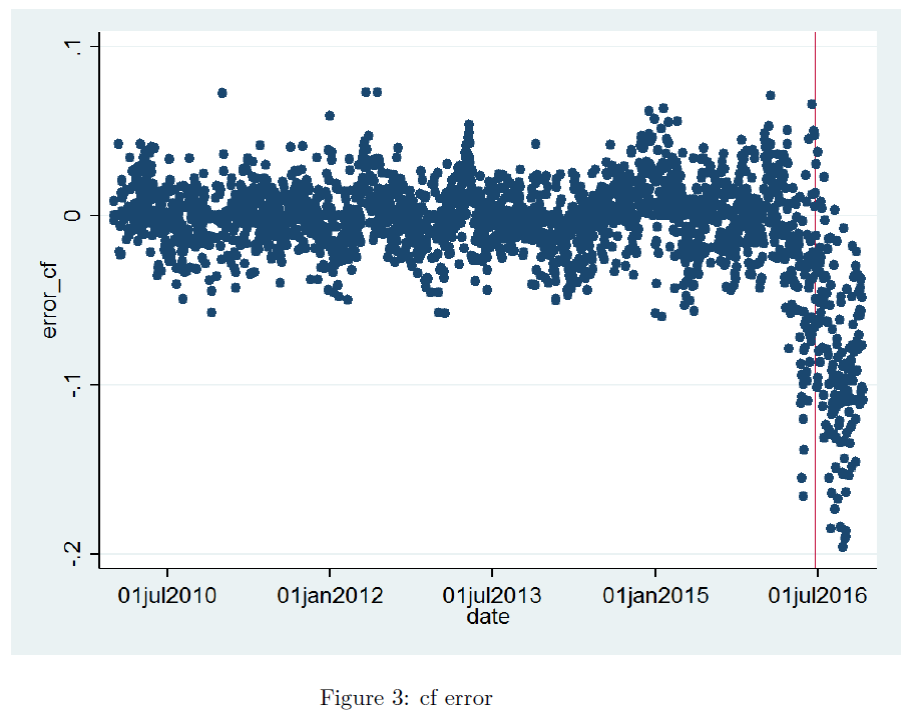
Figure 3 from Kirchmaier and de Guana de Santiago, (2016).
Electricity consumption is way under what would be expected from historical correlations, suggesting a decline in economic — particularly industrial — activity.
While monthly estimates of November GDP are up 1.1% relative to June, industrial output is down by 1.2%, according to NIESR (Dec. 7).
It is always useful to keep in mind that economic statistics are sometimes revised by large amounts.
Guest Contribution: “Five Key Factors for 2017”
Today, we present a guest post written by Jeffrey Frankel, Harpel Professor at Harvard’s Kennedy School of Government, and formerly a member of the White House Council of Economic Advisers.