Even as inflation continues to fall [0], there are calls to raise interest rates soon in order to quell inflationary pressures. I remember reading similar calls for monetary restraint in Japan in 2000-01, when that country was struggling to escape deflation (I sure had a hard time explaining the fears to my boss, and indeed never came up with a good answer). But rather than dismiss these calls, I think it useful to revisit the different measures of the output gap, to see whether those fears of rampant inflation due to disappearing slack make sense. Fortuitously, Michael Kiley has just circulated a new paper reviewing the various concepts of the output gap (see also these previous posts: [1] [2] [3]).
Author Archives: Menzie Chinn
Cyclically Adjusted Budget Balance, Updated
The CBO has just released new estimates of the cyclically adjusted, or structural, budget balance (link here). They’ve also given the series a new name, and some new tweaks. First, observation — the cyclically adjusted deficit is substantially smaller than the actual in 09Q4.
The FRTG Estimate Clarified
The TFRG range of oil spill flow reported yesterday was the lower bound. From PBS Newshour, regarding the 12,000-19,000 barrel per day estimate:
…at least two experts on the panel say that those numbers actually represent what they consider the lower boundary range of the possible amount of oil.
WWRPA at the Hearings of SUAC?
Or, “What would Rand Paul Ask at the Hearings of the Senate Un-American Activities Committee?”. From AP:
“What I don’t like from the president’s administration is this sort of, ‘I’ll put my boot heel on the throat of BP,'” Paul said in an interview with ABC’s “Good Morning America.” “I think that sounds really un-American in his criticism of business.”
The (Macro) World at Your Fingertips
Or, at least the G-20 at your fingertips.
Eswar Prasad (Cornell and Brookings) and Karim Foda have put together a new website, “TIGER: Tracking Indexes for the Global Economic Recovery”.
In collaboration with the Financial Times (FT), Eswar Prasad and Karim Foda of Brookings have developed a set of composite indexes which track the global economic recovery. The Financial Times has produced the Tracking Indexes for the Global Economic Recovery (TIGER) interactive map, which appears on the FT Web site.
Tales from the BEA’s GDP by Industry Release: The Private Economy and Rebalancing
The BEA today released value added and output series by industry through 2009. A few highlights: (1) the share of the private sector value added in total GDP has declined by 1.34 percentage points since 2000; (2) manufacturing’s share of GDP continues to decline in nominal terms; and (3) the share of finance and insurance barely rose in 2009.
What Does a Euro Depreciation Mean for the US?
The euro has been depreciating against the dollar over the past few weeks. The implications of this development for the US depend critically on (1) the extent of the depreciation, (2) the duration, and (3) the source of the depreciation. (See Jim’s post for other links.)
NOAA: Warmest April Global Temperature on Record
That’s the title from today’s top entry on the NOAA website. And if that’s not interesting enough, the subtitle reads: “Also Warmest January-April”
Pictures at a Catastrophe
(With apologies to Mussorgsky.) Here’s the first:
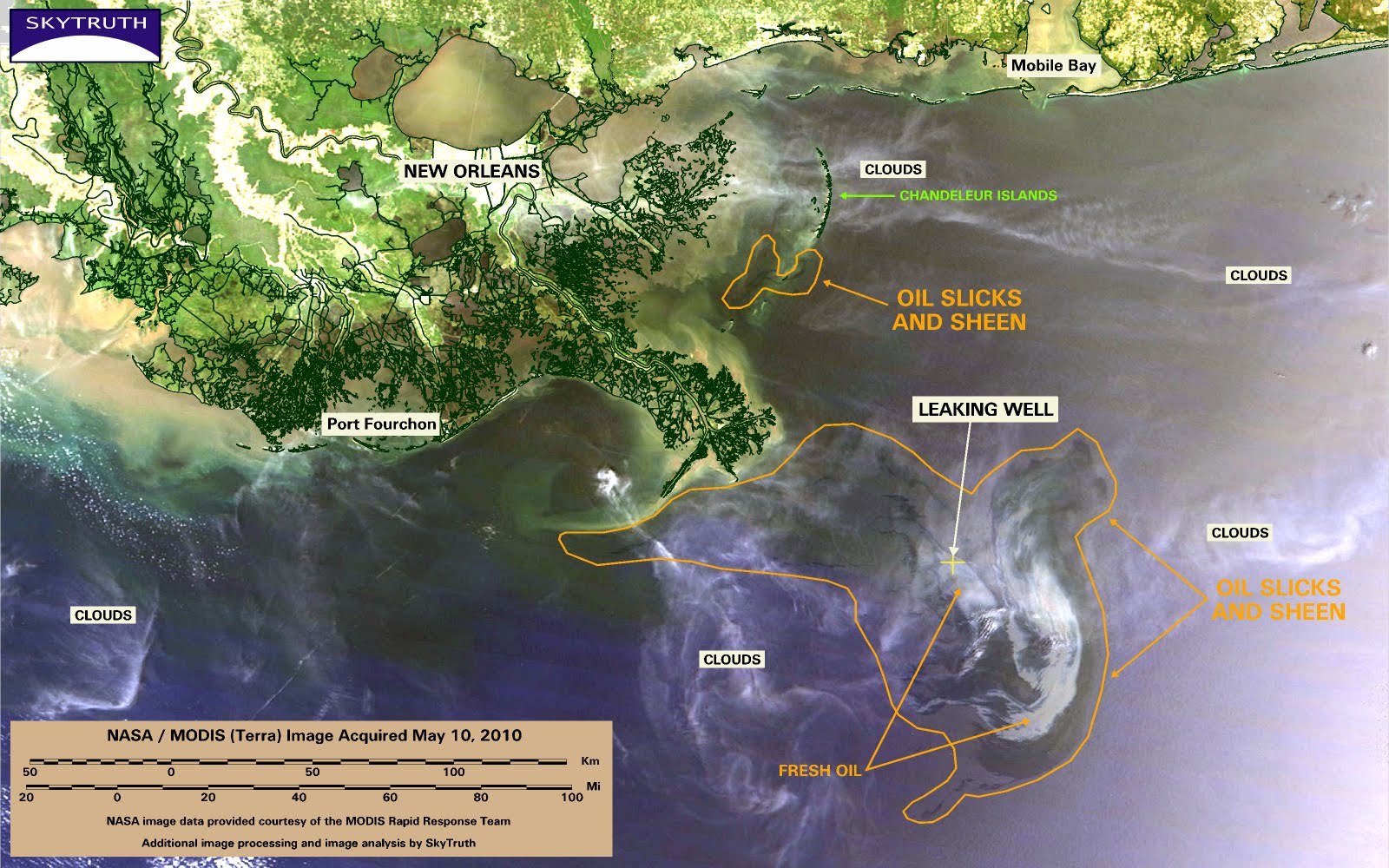
Figure 1: MODIS/Terra image/Sky Truth, May 10, 2010.
Consumption and Imports: A Snapshot
The March trade release came in close to consensus (although suggesting higher 2010Q1 growth [0]). Comparing the advance release figures on real goods imports against the Jan-Mar figures from the trade release doesn’t suggest a big revision (about 7.5 billion Ch.05$ on SAAR). I thought it would be interesting to see if there were any indications that American consumers were weaning themselves off of foreign consumer goods, using the 2010Q1 Advance release figures.