Ron Alquist brings my attention to this ongoing story:
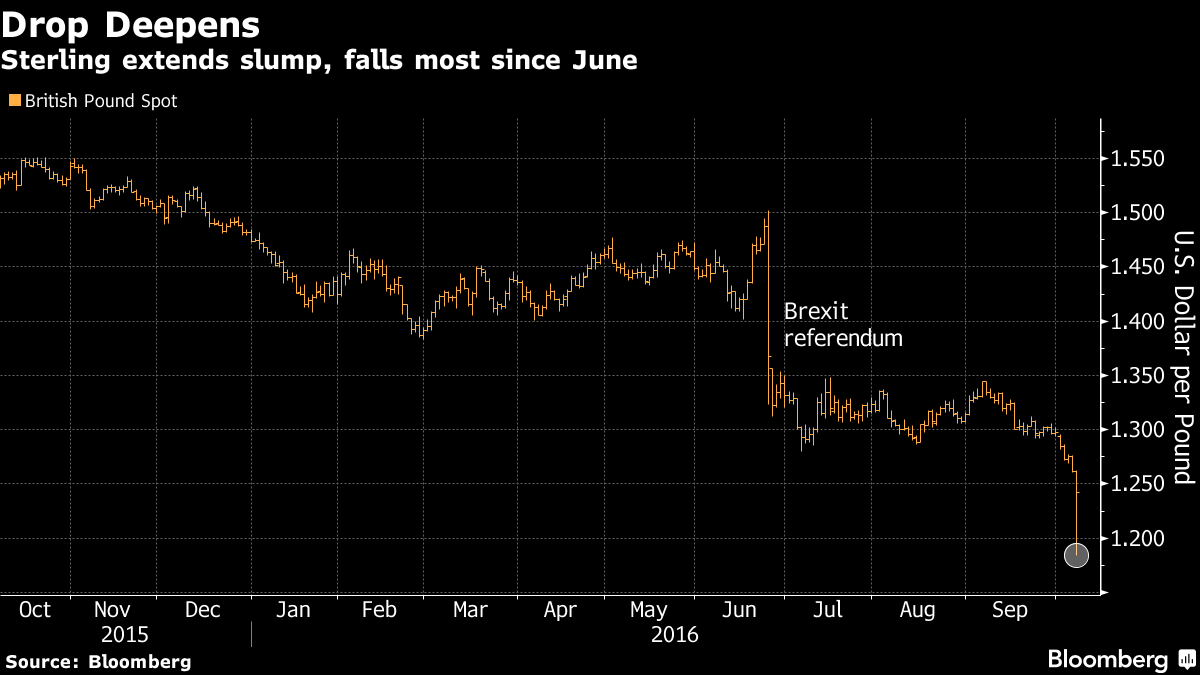
Source: Bloomberg 10/6/2016.
Ron Alquist brings my attention to this ongoing story:
Source: Bloomberg 10/6/2016.
Today, the IMF released forecasts of substantially downwardly revised growth estimates for the US. UK 2017 growth revised down 1.1 percentage points relative to pre-Brexit forecast (World Economic Outlook).
At the beginning of the week (9/27), Bruce Bartlett forwarded me a link to a remarkable document, entitled “Scoring the Trump Economic Plan: Trade, Regulatory, & Energy Policy Impacts” (strangely, dated 9/29), coauthored by Peter Navarro* and Wilbur Ross. I’m way behind the curve, and there have been numerous examinations of the document, so I will not discuss the entire paper. Rather I’ll focus on the following specific question: would renegotiating trade agreements and slapping tariffs on China, conjoined with the Trump fiscal policy, induce a drastic change employment and trade flows? The short answer — yes, but probably in a direction opposite of that posited by the authors.
The Philadelphia Fed today released leading indices for the 50 states and the US. Kansas records the largest projected six-month decline in activity (after recording the largest in the Nation three month decline through August).
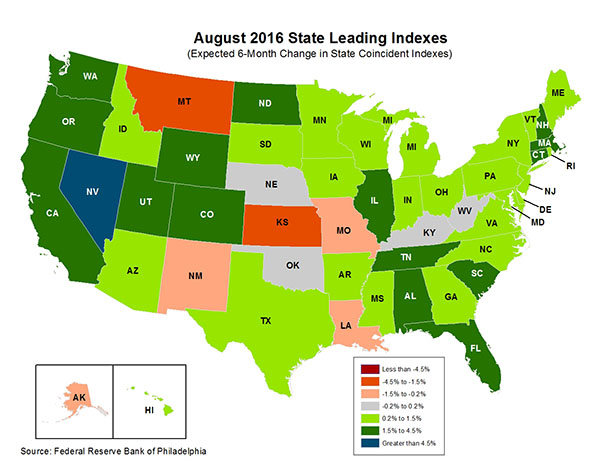
Source: Philadelphia Fed leading index page.
Continue reading
In the debate on Monday, Donald J. Trump comments on Nafta’s impact:
You go to New England. You go to Ohio, Pennsylvania. You go anywhere you want, Secretary Clinton, and you will see devastation where manufacturing is down thirty, forty, sometimes fifty percent — NAFTA is the worst trade deal maybe ever signed anywhere but certainly ever signed in this country.
From the Monday debate:
Today, we present a guest post written by Jeffrey Frankel, Harpel Professor at Harvard’s Kennedy School of Government, and formerly a member of the White House Council of Economic Advisers. A shorter version appeared in Project Syndicate.
No more drought in Kansas. And yet, according to the Philadelphia Fed, Kansas again stands out in economic decline:
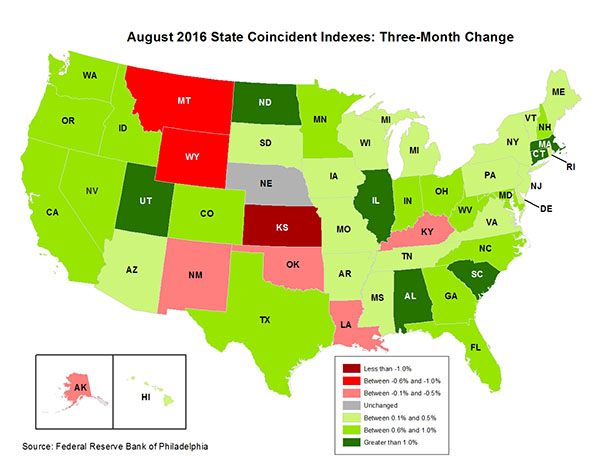
Source: Philadelphia Fed.
Earlier on, Moody’s Analytics took on the task of determining the likely impact of implementing the Trump economic pronouncements (tax cuts for the wealthy, massive deficit spending, increased defense spending, spending cuts on other discretionary components, and revocation of free trade agreements). Oxford Economics has taken up the task of evaluating the more recent incarnations of his pronouncements (to call it a “plan” is giving it too much credence).
Instead of zooming to 130% debt-to-GDP ratio, the new Trump plan only takes it up to 105%.
Continue reading