As of this morning, here was the Governor’s proposed change in language for the University of Wisconsin system in the budget, from this document (page 546):
Author Archives: Menzie Chinn
Governor Jeb Bush on the Desired Trend in Real GDP
From Bloomberg, a quote from the Governor’s speech in Detroit:
… I don’t think the U.S. should settle for anything less than 4 percent growth a year–which is about twice our current average.
Keystone XL Employment Effects
[Updated 2/5]
They’re small. Really small. From the Congressional Research Service (Jan. 5, 2015):
Because job projections, in particular, involve numerous assumptions and estimates, the State Department’s job estimates for Keystone XL have been a source of disagreement. One challenge to State’s analysis is that different definitions (e.g., for temporary jobs) and interpretations can lead to different numerical estimates and “fundamental confusion” about the Final EIS numbers. Consequently, it may be difficult to determine what overall economic and employment impacts may ultimately be attributable to the Keystone XL pipeline or to the various alternative transport scenarios if the pipeline is not constructed.
Economic Performance under Various Presidential Administrations
Lest people forget what happened in times past.
Some Observations on the 2014Q4 GDP Release
The external sector weighs in, and thinking about the length of the recovery.
More on U.S. Employment, Post-Trough
Reader rtd states “it is virtually guaranteed that after a nation’s business cycle trough, that same nation’s employment growth will display an upward trend.” I thought this an interesting enough assertion that it merited additional investigation.
Implications for Economic Growth of Governor Walker’s Proposed Higher-Ed Funding Cuts
From Foxnews:
Wisconsin Gov. Scott Walker is calling for steep cuts to the University of Wisconsin System, while offering the network more freedom in exchange, … [H]is university plan … would cut funding by $300 million over two years…
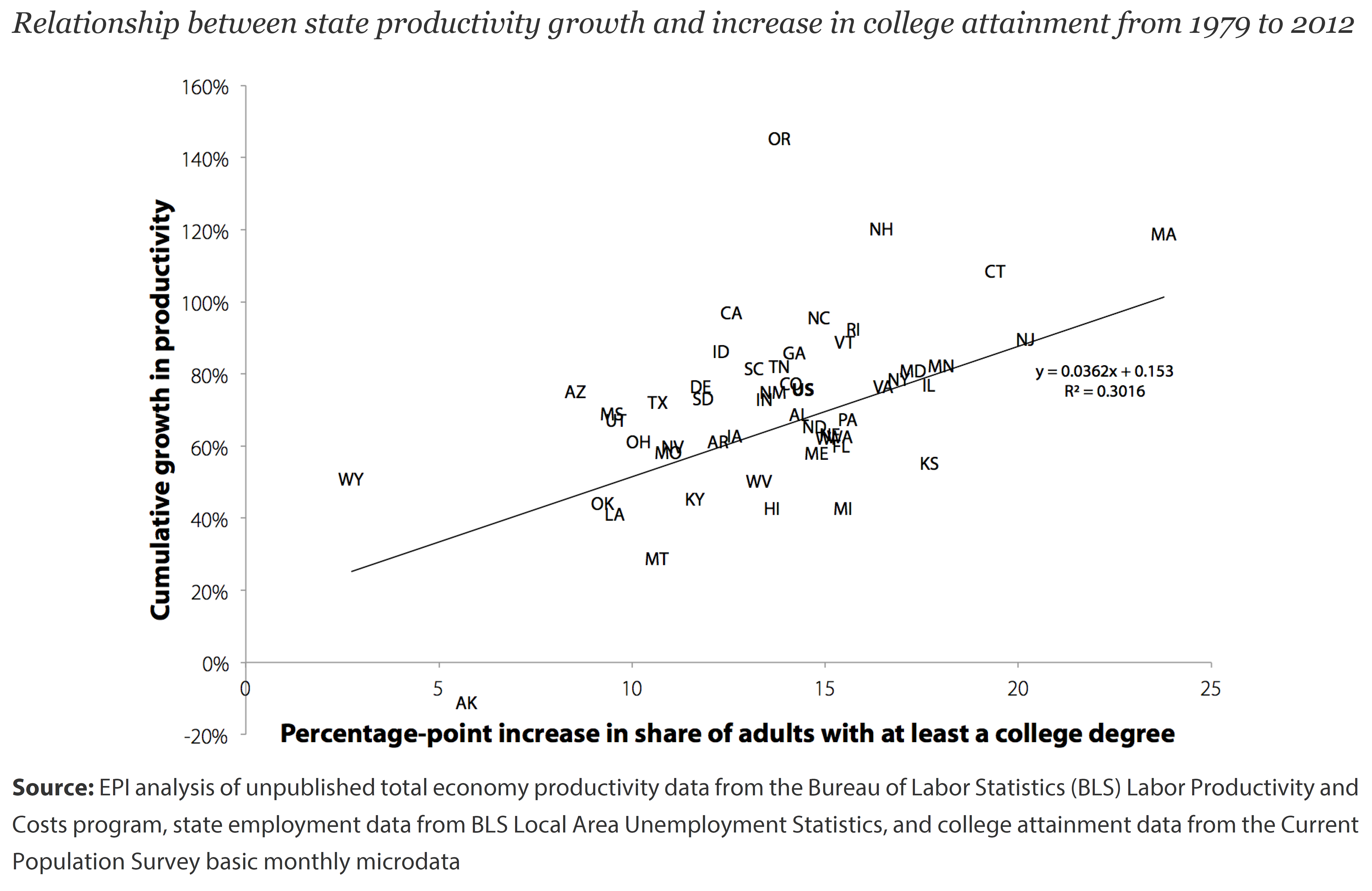
Source: Berger-Fisher (2013).
The Economics of China, and More
Two extremely useful books on China and the Chinese Currency: The Oxford Companion to the Economics of China and Renminbi Internationalization: Achievements, Prospects, and Challenges.
Quasi-Stylized Facts about Employment after Troughs
Reader rtd writes: “…it is virtually guaranteed that after a nation’s business cycle trough, that same nation’s employment growth will display an upward trend”, but when asked about the euro area, argues “The Eurozone is a conglomerate of nations with varying fiscal policies, ideologies, cultures, and the list goes on and on. Please don’t compare apples with hand grenades.”
Private Employment under Obama and Bush
Reader Move On admonishes me to … move on. So here is job creation in this Administration, in comparative perspective.