Last year’s recap was subtitled “Fighting against the normalization of lying”. At least this year, lies are called lies. Now it’s time to shun the liars, and relegate them to where they belong.
Continue readingCategory Archives: Uncategorized
Treasury Spreads and Measured Economic Policy Uncertainty for 2018
A correlation shows up in the last month or so:
Guest Contribution: “Six right predictions in 2018”
Today, we present a guest post written by Jeffrey Frankel, Harpel Professor at Harvard’s Kennedy School of Government, and formerly a member of the White House Council of Economic Advisers.
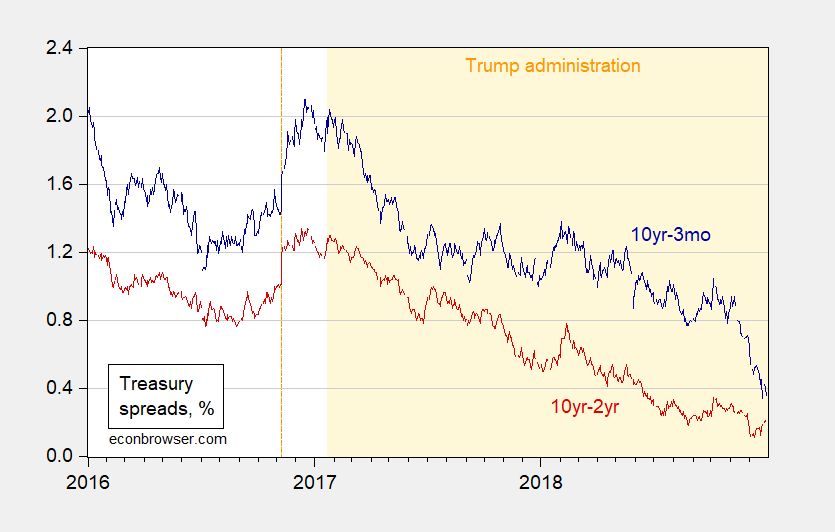
In the Space of Two Weeks, the 10yr-3mo Spread Has Halved, and Is Now at 0.35%
That’s all you need to know.
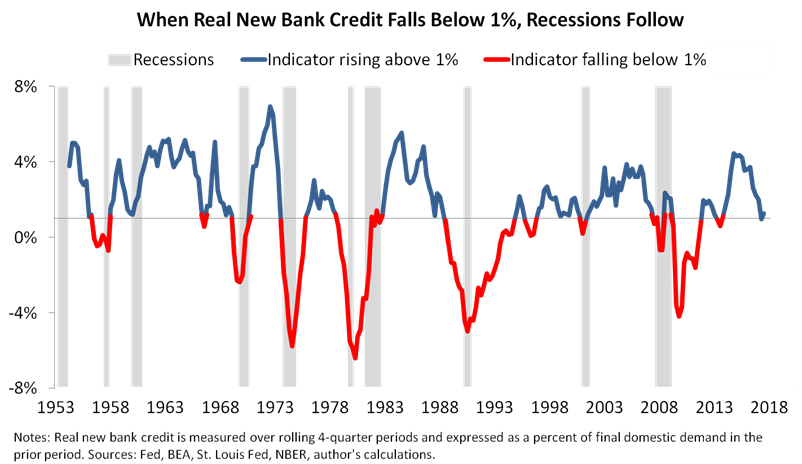
Update, 1/1/2019: Bob Flood sends this graph which — as he characterizes it — “seems to good to be true” (in a social scientist sort of way).
How I Freaked Myself Out: Economic Crisis Management Teams, 2009 vs. 2019
In the wake of the pre-holiday meltdown in the financial markets, I thought for a few minutes about who would be doing crisis management, especially after SecTreas Mnuchin’s ham-fisted attempt to calm the markets. My musings did not calm my nerves. Consider the January 2009 team and the (likely, barring further dismissals) January 2019 team, and you’ll see what I mean.
Continue reading“Top US Economist Stephen Moore: … Powell Should Resign”
Look no further for the source of Mr. Trump’s economic proclivities. The entire article title: “Top US Economist Stephen Moore: Time for New Pilot at the Fed – Jerome Powell’s Policies Are Disastrous – Powell Should Resign” (12/19):
Comey, Cohn, Sessions,… Powell?
From Bloomberg, tonight:
Continue readingYear in Review, 2018: Readers’ Suggestions?
Last year’s review was subtitled “Fighting against the Normalization of Lying”, with entries on Stephen Moore’s estrangement from the truth, Ironman’s misunderstanding of consumer surplus, and Donald Trump’s confusion over debt vs deficits, among others.
Put in suggestions for this year (preferably from the Econbrowser archives or comments); some candidates: the oil embargo of 1967 , recession in California , the miracle of Wisconsin’s manufacturing revival since the tax credit (hint: there is no miracle) , or how we won the trade war with China before the leaves fell .
Imminent Yield Curve Inversions?
Around the world, some 10 year-3 month government bond yield spreads are shrinking.
President’s Statement on the Death of Seven Year Old Migrant in CBP Custody
n/a