(With apologies to Mussorgsky.) Here’s the first:
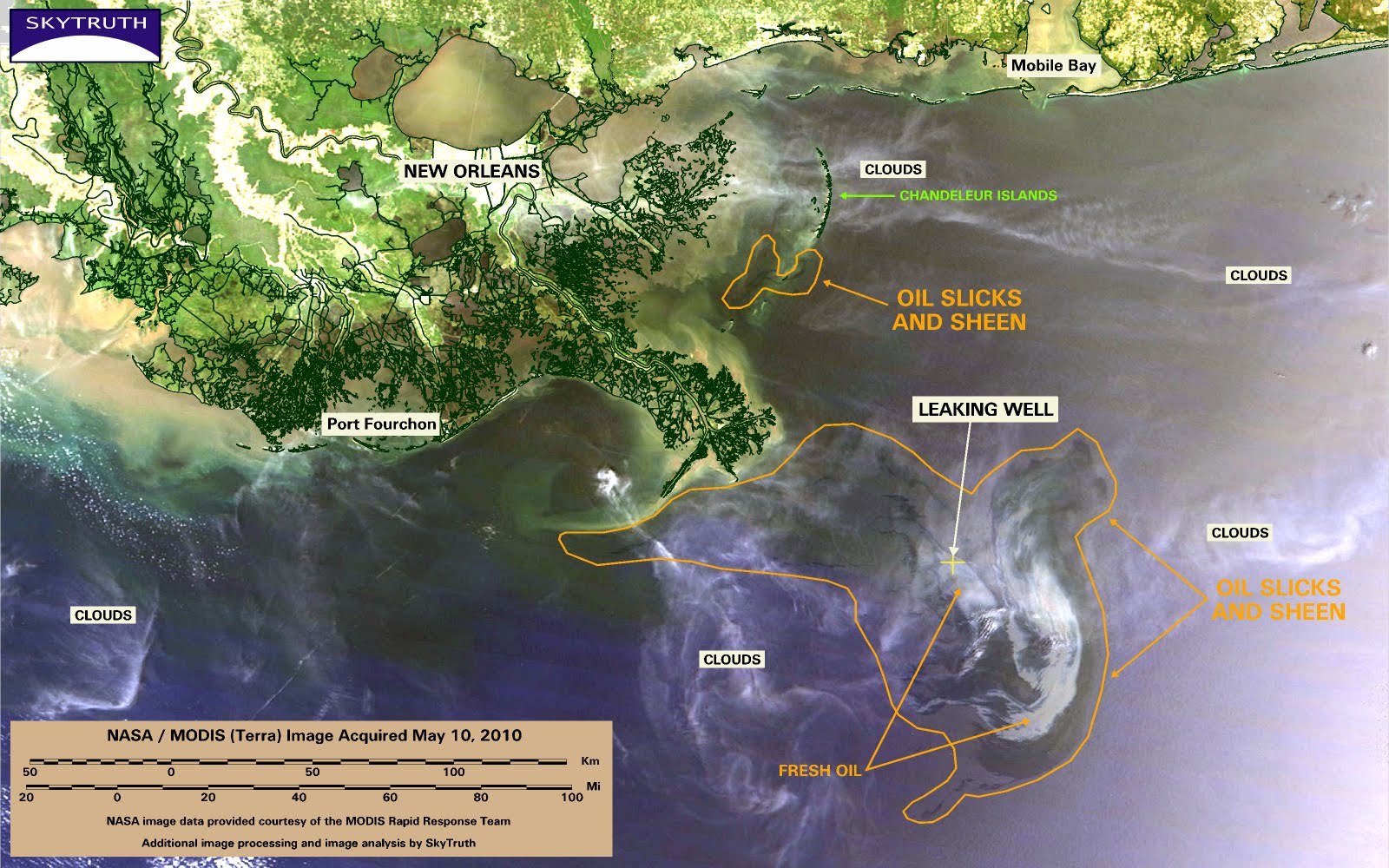
Figure 1: MODIS/Terra image/Sky Truth, May 10, 2010.
(With apologies to Mussorgsky.) Here’s the first:
Figure 1: MODIS/Terra image/Sky Truth, May 10, 2010.
University of Maryland Professor Boragan Aruoba (of the Aruoba-Diebold-Scotti Business Conditions Index fame) has an interesting new paper that offers another perspective on the challenges facing Europe.
The March trade release came in close to consensus (although suggesting higher 2010Q1 growth [0]). Comparing the advance release figures on real goods imports against the Jan-Mar figures from the trade release doesn’t suggest a big revision (about 7.5 billion Ch.05$ on SAAR). I thought it would be interesting to see if there were any indications that American consumers were weaning themselves off of foreign consumer goods, using the 2010Q1 Advance release figures.
As Europe and the IMF announce close to a trillion dollar rescue package, Megan McArdle asks, what’s the benefit to the countries providing the funding? Here are my thoughts.
In a post regarding the transmission of financial turmoil from Europe to the US last week, I noted my research with Kristin Forbes on the determinants of the strength of financial market linkages. A more recent and extensive survey of the macroeconomic — as opposed to financial — linkages is provided by a recent released working paper coauthored by Ashoka Mody and Alina Carare at the IMF.
For a few exciting minutes on Thursday, the Dow-Jones Industrial Average was down a thousand points, with some major stocks momentarily falling to a penny a share. The basic story appears to be as follows. Initial strong selling in some stocks such as Procter & Gamble led the New York Stock Exchange to halt trading temporarily in a few stocks until specialists could sort out what was going on. But trading in those stocks continued on other exchanges, where as a result of their thinner books, orders to sell at any price went far down the list of existing buy bids. These lower prices triggered further automatic selling that sent some stocks all the way through the list of outstanding bids until encountering basement bids at one cent a share.
One popular meme is to attribute these fireworks to the existence of multiple trading venues that didn’t all get shut down simultaneously (e.g.,
WSJ or NYT). But I think we should also be taking a closer look at the folks who were sending the sell orders rather than just blaming the exchanges for carrying out the instructions they received.
From Peter Coy and Stanley Reed in Bloomberg:
Should the heaviest portion of the spill come ashore, it may cause damage rivaling the 1989 wreck of the Exxon Valdez in Alaska’s Prince William Sound, despoiling the breeding grounds of species in the fragile coastal-buffer zone that provides hurricane protection.
From the April 2010 employment situation release: Nonfarm payroll employment trends strongly upward; previous months’ figures are revised upward; not seasonally adjusted figures move upward as well; the upward movement is not driven by government employment; the experimental household based quasi-payroll employment series moves upward even more strongly; and aggregate hours is now 1% higher than the level at 2009M06.
I was wondering why the Reuters website wasn’t loading on my computer. Then I got a phone call from a reporter asking about the US stock market meltdown in response to Greece…which struck me as an odd linkage. It still strikes me as an odd linkage.