Let hope our responses to the next ones are better than “Heckuva job, Brownie”.
To Log or Not to Log, Part V
The Shanghai stock market has undergone some wild gyrations over the last year… and back in 2008. Following up on To Log or Not to Log, Part IV:
To Log or Not to Log, Part IV
Do stock price indices follow a random walk? No, but log stock price indices do…kind of
On China, and Preventing the Financial Runs of August
Reasoned analysis and careful decisionmaking is required.
Governor Walker on Responding to the Chinese Economic Situation
From USAToday:
“Americans are struggling to cope with the fall in today’s markets driven in part by China’s slowing economy and the fact that they actively manipulate their economy,” the Wisconsin governor said in a statement. “Rather than honoring Chinese President Xi Jinping with an official state visit next month, President Obama should focus on holding China accountable over its increasing attempts to undermine U.S. interests.”
China’s economic slowdown
U.S. stock prices as measured by the S&P500 fell almost 7% last week. What’s going on?
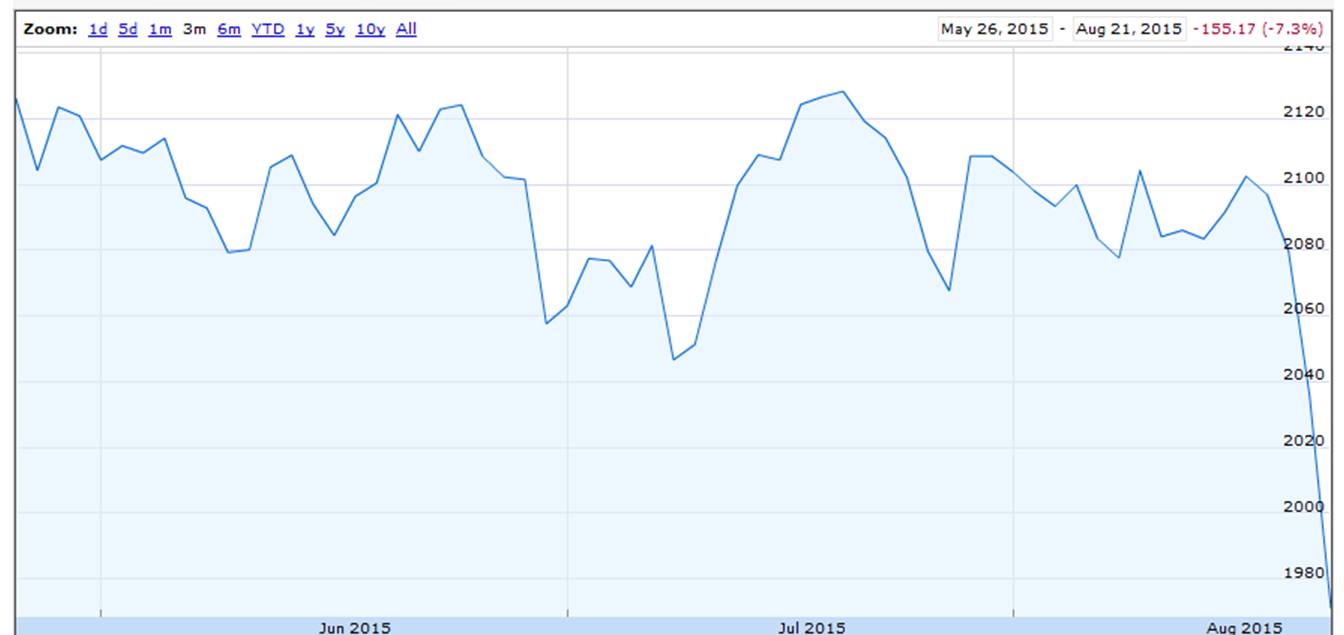
Value of S&P500 index over last 3 months. Source: Google Finance.
Continue reading
Projecting 2015 Acres Burned and Firefighting Expenditures
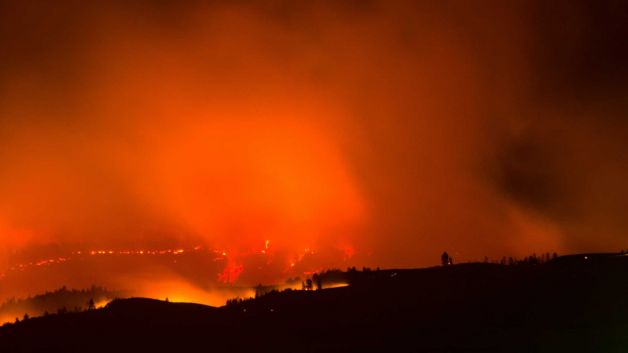
Blue Creek fire, close to Walla Walla, WA. Photo: Greg Lehman, AP. Source: Seattle Post-Intelligencer.
Reader CoRev asserts wildfire intensity has not been severe of late. I’ll just graph some data to bring reality to the interested.
Remember: “Global warming is a total, and very expensive, hoax!”
So said Republican Presidential candidate Donald Trump. Pay no heed to the massive wildfires. And temperature readings.
Here is a map of current fires in the US (see here for Canada):
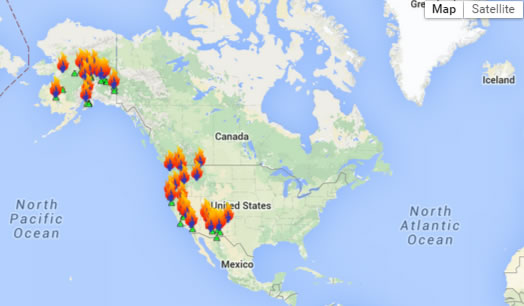
Source: NOAA.
Wisconsin NFP Employment Almost Reaches Prior Peak
Civilian employment falls to 1.3% below prior peak.
Wisconsin (Not) Outpacing Other States
Wisconsin is not outpacing its neighbors according to the Philadelphia Fed’s coincident indices meant to proxy economic activity; and, contrary to assertions [1], the lagging pace of Wisconsin is not apparently attributable to a milder downturn in Wisconsin.